Showing posts with label food. Show all posts

19 December 2008

The Foundry + Sprinkles

Last Sunday was my birthday. Considering I am still recovering from my wedding three weeks earlier (hence this being the first BFT post in 5+ months -- w00t!), I decided on a low-key affair consisting of: sleeping in, coffee infused with a cinnamon stick (inspired by Mexico honeymoon), passively watching football while tooling around on my new MacBook Pro, and finally getting up in the afternoon to hit up two Los Angeles spots I've heard much about.


I first heard of The Foundry from an admissions counselor at Kitchen Academy in Hollywood (I have and still do flirt with enrolling). They offer a fixed menu on Sundays. According to our waiter, Chef Eric Greenspan hits up the local farmer's markets and devises the menu that very day. Which is a bit of a lie since I peeked at the menu on their website on Saturday, and a large majority of it was indeed there on Sunday, but no matter. I really dug the vibe: Low key, sophisticated without being pretentious, with a bar out front that has just enough room to squeeze in jazz and blues acts. Chef Greenspan even came out a couple of times to make sure everyone was enjoying their food. Sure, you will be surrounded by entertainment industry conversations, and the valet is seven freakin' dollars, but the food... oh the food.

Finely crafted. Gorgeous. Flavorful. We stuffed ourselves on four courses.

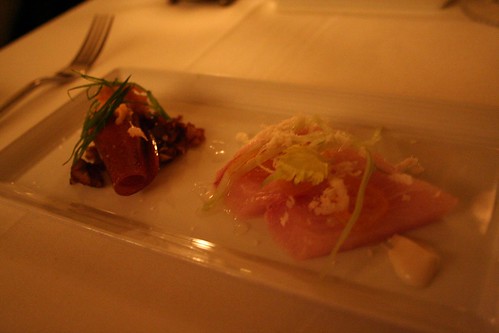
Camille's 1st course -- Duo of raw fish: spicy albacore tartare, chestnut, persimmon / yellowtail sashimi, celery, kumquats

She says: "Fabulous. Phresh with a P-H. I really liked the salt on the yellowtail with the celery and the citrus." Note the tartare rolled up inside a date.
My 1st course -- Potato soup: gruyere and leek bread pudding / bacon / fried egg

They bring out the dish with the bread pudding, bacon, and egg by itself. Then they pour the soup right in front of you. The soup was flavorful without being too heavy. And I'm a big believer in topping anything and everything with a fried egg. When you think about it, it's like a classic diner breakfast in soup form. Except really elegant. The bread putting puts it over the top. Lots of different textures going on.


Camille's 2nd course -- Potato Gnocchi: swiss chard / figs / blue cheese

She says: "The best thing there." I had a bite. Twas most cheesy, in a good way.
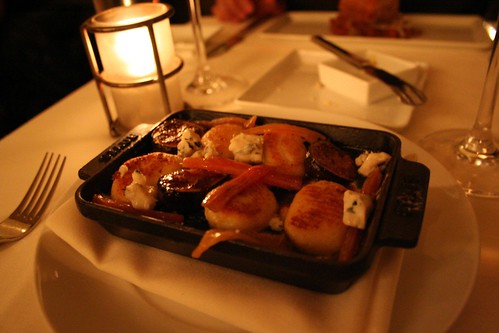
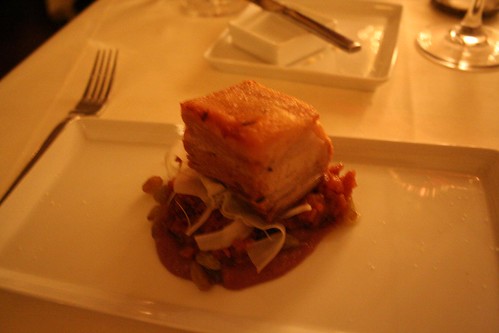
My 2nd course -- Crispy pork belly: yams / fennel / raisins

Somewhat similar to one of my favorite Filipino dishes, lechon kawali. Which is exactly why I ordered it. It didn't disappoint. The pork belly was perfectly cooked, with crispy skin/fat that wasn't oily in the slightest, plus really tender and juicy meat. Camille suspects that, instead of deep frying it, they probably ladled hot oil to crisp it. The salty/crispy of the pork on top of the rich sweetness of the yam was delightful.

Camille's entree -- Crispy skin salmon: broccoli / walnuts / orange

She says: "Cooked perfectly. But it was 'eh.' Something you can get at any restaurant."


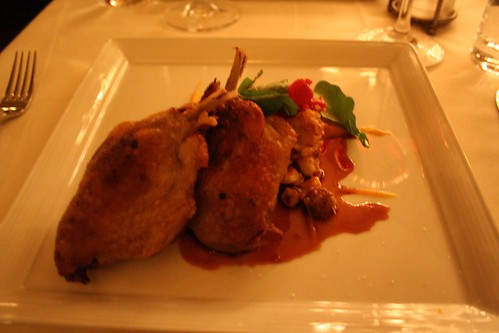
My entree -- Duck confit: squash / piquillo peppers / dried cherry / spaetzle

I was surprised they gave me two duck legs. At this point, after potato soup and pork belly, I was beginning to fill up. Crispy and juicy in all the right spots. I don't know what kind of salt is used, but it brings a subtle yet distinct layer of flavor to the duck. The fixings were fine, but not the melding of flavors that my previous courses had.
Dessert -- Eggnog creme brulee: dried fruits / orange sherbert

At this point we were about to explode. I didn't mention that between each course, a small bread was served. No more than two bites apiece, but we're four courses in, now. Woof. I really liked the addition of the fruit and especially the orange sherbert. The citrus helps cut through the richness and sweetness of the creme brulee. I wanted the sugar coating to have a more distinctive crunch... you know, the whole brulee bit. In fairness, I was done before this thing hit the table. Lots. Of. Food.


We had actually gone to Sprinkles beforehand to pick up cupcakes. You'd have to be a hermit to not have heard of Sprinkles. They were recommended by Martha Stewart at one point, which is basically like having the clouds part and God tell you you are his son. And as evidenced by the "coming soon" part of their site, they are going to be positively everywhere. Cupcakes are the new gourmet frozen yogurt, apparently.

And lo and behold, when we arrived, there was a 20-minute line out front. I am immediately distrustful of famous Los Angeles proprietors who flaunt their fame and have excessive lines (Pink's Hot Dogs can lick my ass), but I was won over by one distinct menu offering on Sprinkles' wall: a shot of frosting. Awesome!

We didn't actually get a shot of frosting, but the cupcakes were good. Firm and moist and sweet and all that stuff. They do a cream cheese frosting that's very nice. The red velvet cupcakes are one of their most popular, and for good reason. Even though I was stuffed, I plowed through one when we'd returned home. Most satisfying.
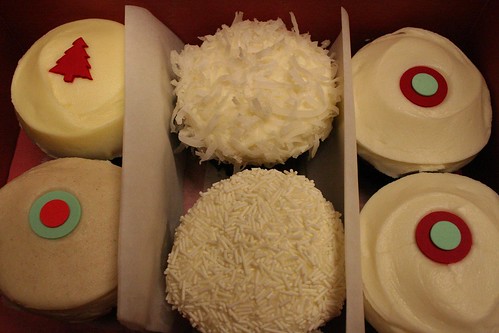

And to top it all off, they make dog-friendly cupcakes.

19 June 2008

Maui, Part 2: Going Native

Read Maui, Part 1

Before coming to Maui, the only agricultural product I associated with the island was the Maui onion. And then only because they make Maui Style onion-flavored potato chips. When I say "they make," I am referring to the Frito-Lay division of PepsiCo. in Plano, Texas. (If you want to find any of their "Hometown Favorites" products, use their nifty item locator.) According to the ingredients list, there is indeed some Maui onion powder in the Maui Onion-flavored chips. It's the 13th of 15th ingredient listed, ahead of Hydrolyzed Proteins and Caramel Color, but behind Corn Maltodextrin, Monosodium Glutamate, Malic Acid, and that classic and most sacred of culinary components, "Natural Flavor."

I don't necessarily have a problem with eating mass-processed junk food. After all, Camille and I stayed in early on our first night, our jet lag-induced slumber interrupted by a dinner that consisted of a bag of Natural Flavor and Maui Onion Powder. But there is something to eating fresh and local, as I found out.

Of course, this is the tourist's dilemna: to find that definitively, quintessentially local thing before it gets dolled up, appropriated, outsourced, and repackaged as Totally Local, Brah! Some recreations are worthwhile (like, say, a luau), but others, not so much (floral golf ball 3-pack). What I'll take away the most from Maui is a sense of what it truly means to go local, at least as far as food is concerned. Nevermind where the purveyors, chefs, and waiters came from. Much of the best stuff Camille and I ate was from the land and waters of Maui.

Imagine that, eating food before it gets packed and shipped off to Plano.

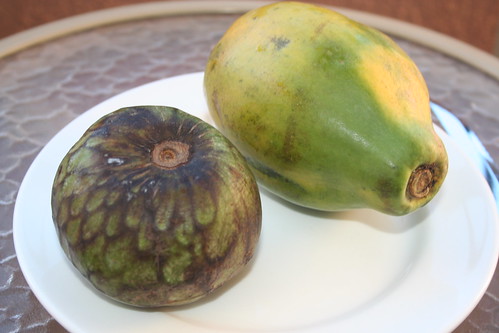
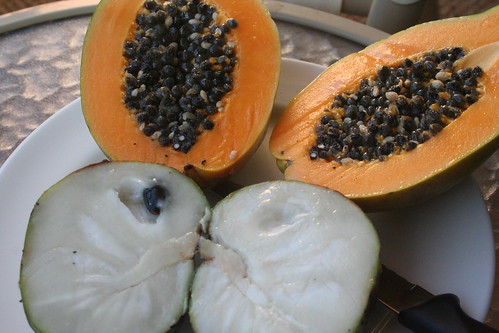
I was never really a farmer's market guy before. I simply didn't understand the difference between what Albertson's, Ralph's, and Von's featured in their produce section versus stuff that had not traveled thousands of miles. Before our trip to Hawaii, I had some gnarly peaches and pears that came from my local Los Angeles Albertson's via Chile. Certainly, I've had perfectly decent fruit from faraway lands before, but it's easy to accept "pretty good" when you haven't had "frakking fantastic" on a semi-normal basis. It helps when that frakking fantastic fruit is exotic and tropical, as with the cherimoya and papaya we procured from the weekly Maui Swap Meet. (Also picked up some cool and, yes, local t-shirts.)
I'd never even heard of a cherimoya before this trip. It's a custard apple with a sweet, semi-pungent smell, and soft, sweet, white flesh that truly has the texture of soft custard. I spent the entire trip in Maui hoping to get a taste of fresh passion fruit, but the cherimoya sated my exotic fruit desires. Frankly, it's the damnedest thing I've ever eaten. It's Jell-o grown by a tree. And you know what they say about Jell-o.

By the way, you can thank Google for Calimoya, a cherimoya, passion fruit, avocado, and dragon fruit grower in the Santa Barbara area. Expensive, but will ship 2-day UPS when the fruits are in season. Have I overused the phrase "frakking fantastic" yet?

One of the most popular ways to take in the local scenery of Maui is to drive the road to Hana, a twisting road along Maui's eastern coast that includes lots of lush greenery, hiking trails, waterfalls, and fruit stands that operate on the honor system. Sadly, I did not snap a picture of one of these fruit stands that consist simply of a shelf or two of produce, a menu listing prices, and a lock box with a slot for money. The best spur-of-the-moment purchase on the trip was at the Halfway to Hana stand (which also contained people -- boo), where we'd stopped for their much-lauded banana bread. A free sampling of toasted coconut was placed in front of me as my purchase was rung up. I'm not a huge coconut fan, especially dried coconut, but this stuff was something else. The perfect balance of that nutty coconut flavor with (light brown?) sugar. The banana bread was really good, but this sweetened toasted coconut stuff alone was worth half the trip to Hana.

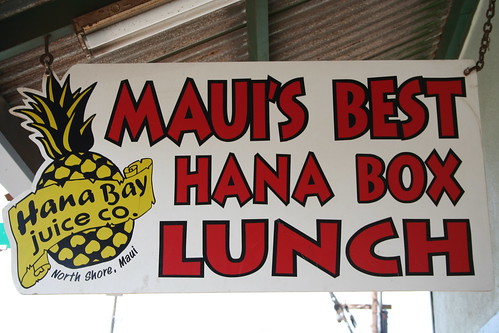
However, unless you're satisfied grazing on mysteriously orphaned fruit at a fruit stand, you'll want to grab a picnic lunch before embarking on the Hana trip. We hit up the Hana Bay Juice Co. in Paia, which has scrumptious sandwiches and really tasty smoothies. They even offer coolers and ice packs. What I remember most about the sandwiches other than them tasting really good was the bread. Sure, I suppose eating a sandwich on a beautiful peninsula in paradise helps, but all the great sandwiches that stick out in my mind have had one thing in common: perfect bread that's crunchy on the outside, soft and moist on the inside, and holds up to the rigors of sandwich eating without spilling its innards everywhere. Camille had a smoked salmon sandwich with cream cheese and capers. I had roast beef. Good ingredients all around, but again, when it comes to sandwiches, it's all about the bread.

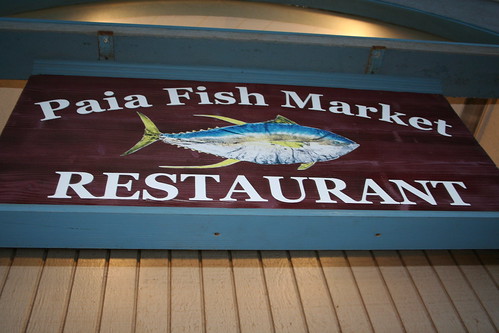
Returning from Hana, we stopped in Paia again to eat at Paia Fish Market. It's a casual, lively place that features some strong European accents from both customers and employees. The vibe is that of a quaint, all-night diner, with the cook having to shout order numbers over the loud din of conversation at shared tables.

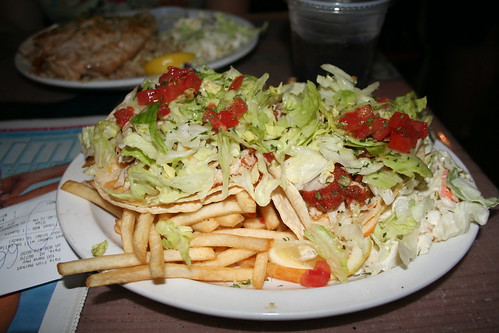
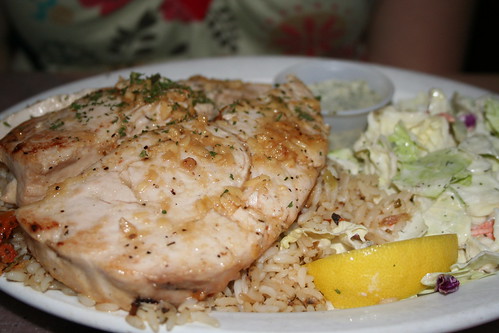
In terms of their food, they feature a lot of fresh and tasty fish. I had ono tacos. The slaw of roughage in the tacos was, as you can see, a little overwhelming, but it was all good. A fine, messy meal. Bonus points for heating the tortilla so it was slightly crunchy. Camille's opah sauteed in butter, white wine, lemon, and garlic was good if a tad too well done. (Fine woman that she is, she chose the meaty opah in anticipation that it'd be overcooked, knowing it'd retain some moistness.) Okay, so ono fish tacos aren't quintessentially Hawaiian. And God knows who was the first to saute fish in garlic, butter, white wine, and lemon. But there isn't easy access to stuff like this in Los Angeles, so, in my mind, it's explicitly local to these islands. (Nevermind the fries and rice accompanying our dishes.)

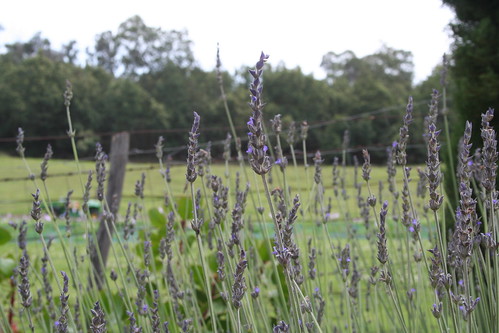
No, the truly local part of our trip didn't begin until our tours into Kula.The Ali'i Kula Lavender Farm is a nifty place to start. (Or the 'AKL.' Not to be confused with the ATL.) Incidentally, Ali'i is a Hawaiian term for royalty or noble class. And the dude who started the farm goes by the name of Ali'i. Seriously, who names their kid "royalty?" Other than Michael Jackson? Moving on...

The AKL is 10.5 acres of serene, manicured gardens containing something like a kajillion types of lavender. Tours range from the free, self-guided variety (highly recommended) to a $12, 30-minuted guided walk and, lastly, an exclusive golf cart tour with grower Alii Chang. This last one is limited to five people per day, and for $25 bucks you'll have a dude whose first name is literally royalty talk your head off about a kajillion types of lavender.

The place is beautiful, don't get me wrong. There's something kind of mystical about Kula, all the lush, green rural land halfway up the slopes of a dormant volcano, and this farm is a fine place to stop and take it all in. But you can certainly do it for free with one of their photocopied guides to lavender, which we did. Camille and I had fun eating lavender scones and drinking lavender tea on the AKL Farm's quaint patio after perusing the many lavender-infused items in the gift shop. I recently used some AKL Farm lavender pepper to coat the skin on some pan-roasted chicken and also on shrimp, and it was good stuff -- a wise investment.

As for the scones... well, okay, they taste like scones. The lavender flavor in them could easily by in my mind. No, a more palpable and enjoyable way to eat the scones is to slather them with lavender lilikoi jelly. It's more than a dollar per ounce and we bought two jars. Sweet, tangy, and fragrant, it made the scones a delectable experience. Washing it down with lavender tea, which certainly does not skimp on the lavender, made for a wonderfully calming afternoon.

Lavender, by the way, is native to the Mediterranean, not Hawai'i. Strictly speaking, next to nothing is native to Hawai'i except dried lava. But one of the fantastic things about Hawaii that's very evident in Maui -- and especially in Kula -- is the fertility of the land. I couldn't really tell you what a microclimate is (though I'd hazard a guess that it means "really small climate"), but they got 'em in spades in Maui. Which is a good thing for farmers.The Surfing Goat Dairy is a fun little diversion. It was founded by two German expatriates (seriously, what is it about Maui that attracts the Europeans?), but we were toured around by a kindly, portly, limping Polynesian lady wearing a muumuu. She reminded me of the cafe owner in 50 First Dates. Hopefully, no one has said this to her face, but hey, I don't have a lot of pop culture references for kindly, big-boned Polynesians.

The tour is short and sweet: see milking equipment, see baby goats, see adult goats, see pot-bellied pig humping rocks, taste cheese. If we had the means to keep it cool, we would have definitely bought some cheese to bring home. Not to belabor the point, but all the cheese was super fresh, and in their relatively short time as a dairy, the Surfing Goat has certainly mastered ways to combine their creamy cheeses with some local flavors, like the lilikoi quark.

What I really liked more than anything else was realizing just how small an operation the Surfing Goat Dairy is. It really is just one family with a few hired hands, and in this day and age, it's admirable to see them pull that off. They even resist selling their older goats for meat, simply letting them retire to pasture for the rest of their natural lives. I have no idea if there are undiscovered local farms in the Los Angeles area, but I sure hope so, because it's something I'd definitely support.
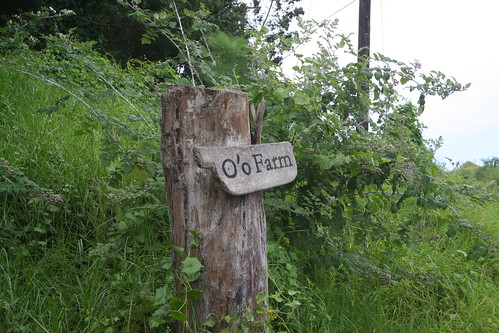
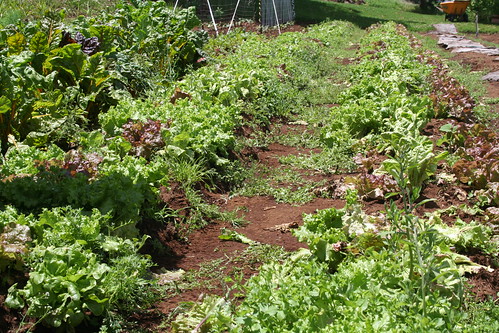
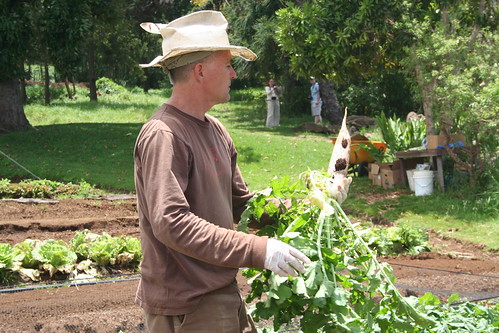
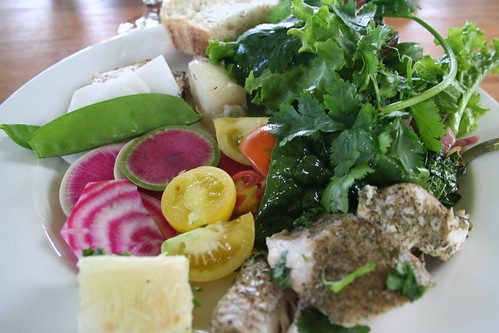
The lavender farm features a very specific food chain. If you're not interested in any type of lavender, much less countless variations of them, but you are interested in really good food and the food chain that supports it, then you owe it to yourself to take the tour and have lunch on the O'o Farm (which is literally down the road from the AKL). It's an organic farm growing much of the produce served at two of Maui's acclaimed, upscale restaurants, Pacific'O and I'O. They'll take you around and teach you about their organic practices, let you taste stuff straight out of the ground, and then serve you a lunch prepared almost entirely with ingredients they've grown (the exceptions being bread and fish, which cannot be grown in dirt).

The tour is really informative and the meal is great, deliberately kept simple to highlight the assorted harvest. The place attracts a really interesting crowd, too, from agriculture and nutrition students to foodies on the hunt. The tour/lunch is limited to about 15-20 people, so do make a reservation early. It's a little pricey at $50 a person, but this is a whole lot more than gawking at lavender. This is food at its most elemental. The label "organic" gets tossed around so easily, so to see a living, breathing example of an organic farm is incredibly edifying. I had no idea what "compost tea" was, but I do now, and I think I'm a better eater for it. To see everything go from the ground to the table is more fun than I could have imagined. Beets never tasted so good.

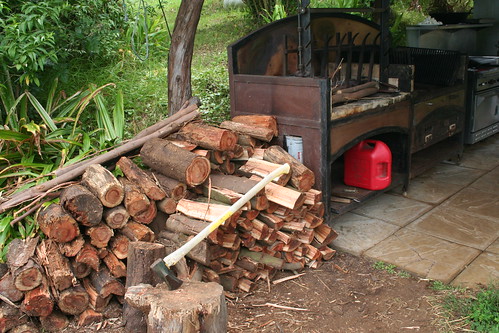
Plus, how often do you get a chef de cuisine from a highly rated restaurant to cook everything for you on an outdoor, wood-burning stove? Seriously, how cool is that?
Coming soon in Maui, Part 3: The other end of the O'o Farm food chain, plus the stuff I couldn't neatly tie into Parts 1 or 2.

Hana Bay Juice Co.
111A Hana Highway
Paia, HI 96779
(808) 579-8686

Paia Fish Market
110 Hana Highway
Paia, HI 96779
(808) 579-8030
paiafishmarket.com


Ali'i Kula Lavender Farm
1100 Waipoli Road
Kula, HI 96790
(808) 878-3004
www.aliikulalavender.com


Surfing Goat Dairy
3651 Omaopio Road
Kula, HI 96790
(808) 878-2870
surfinggoatdairy.com

O'o Farm (reservation required)
Waipoli Road
Kula, HI 96790
(808) 667-4341
www.oofarm.com

13 May 2008

Maui, Part 1: Kalua Pig & the Plate Lunch

Aloha! Let it be said that Camille and I aren't huge fans being in water. Which would probably present a problem for us when visiting Hawaii, except Hawaii has awesome food. Also, it's sunny and warm and lush and beautiful. But you knew that.

We went a year ago for a wedding and visited the Big Island and Oahu. It was a trip that laid the groundwork for this blog, but despite the endless pictures of food, I never got my thoughts down to clearly write about it. So, some real quick recommendations...

Big Island

Merriman's in Waimea. Chef/owner Peter Merriman is one of the twelve founding chefs of the Hawaiian Regional Cuisine movement, and this restaurant really lets the local ingredients shine. However, Merriman's Market Cafe in the Waikoloa resort/mall is very underwhelming. If you're interested in a great sandwich, head down to Island Lava Java in Kona and get yourself some coffee while you're at it. If you're in the market for some coffee beans, you'll have plenty of options. Mountain Thunder's very nice.

Oahu

The best plate lunch in Honolulu is Yama's Fish Market. It's not really near any tourist strips, which is a good thing. A wide variety of plate lunches (very good lau lau) to choose from, as well as a vast selection of poke. Matsumoto Shave Ice is an enormous tourist attraction in the North Shore town of Hale'iwa, and for good reason. They shave the ice down to a perfect, snow-like texture that you don't have to chew. I'd recommend adding ice cream and red bean, and hell, buy yourself a T-shirt. (By the way, any place on the island that offers "shaved ice" is a fraud.) On the way to Matsumoto's, you'll probably see the shrimp trucks parked along the road. Giovanni's Shrimp Truck loads on the butter and garlic for a great shrimp scampi. And if you bring a sharpie, you can scrawl your name on the graffiti-covered truck. If you're looking for fine dining and another one of those Hawaiian Regional Chefs, I highly recommend Alan Wong's in Honolulu. It's in a nondescript office building that you'll surely miss on first pass, but inside is terrific food terrifically served. I'm pretty sure we had a guy who's only job was to introduce the dish and suggest the ideal way of eating it. You'll pay for this type of thing in the end, sure, but it's always nice to have one fine dining night on a vacation.

This year, we had another wedding to attend, this time in Maui. In the chain of islands, Maui sits between the Big Island and Oahu. In terms of energy and culture, I found Maui to be an interesting mix of Oahu's urban paradise vibe and Hawaii's lava-fields-with-beach-resorts thing. If I had to pick one word to describe Maui, it'd be rural. And if I had to pick a second word, it'd be immigrants. The locals who didn't work the tourist trade all seemed to work the lands. And in stark contrast to Oahu's markedly Asian demographic, a great many locals in Maui are, well... I believe the politically correct term is "whitey." Some of the Hawaiians who waited on us hailed from Huntington Beach, Irvine, and the Czech Republic. After returning from the lush road to Hana, we ate in the quaint town of Paia and were enveloped by European accents from all over. I have no hard data to back this up, but it sure seems like the people who decide to move to Hawaii end up choosing Maui. So it is that some of the best local food we had was prepared by a Seattle-raised sous chef and German goat cheese makers.

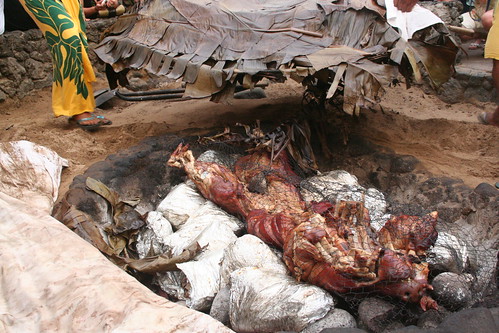
One of the most iconic things about Hawaii and Hawaiian food is, of course, the kalua pork at luaus. It's fast becoming one of my favorites, in part because of its simplicity: salt the pork, wrap, and roast for a long time. If you don't have the time, space, or inclination to dig yourself an imu, heat some stones, and bury a whole pig on top of it with some earth, then you can google yourself a recipe that will require liquid smoke and several hours in your oven.
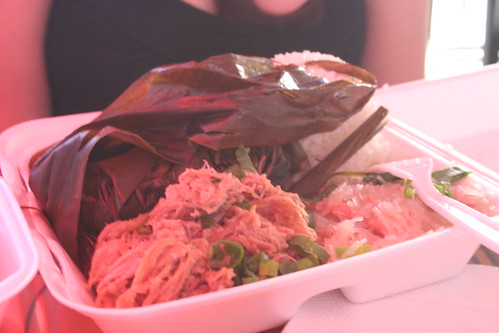
One of my favorite ways to have kalua is part of a mix plate. The plate lunch is another deeply Hawaiian dish, with Hawaii's immigrant history literally on display right in your styrofoam container. Kalua, teriyaki, fish, whatever you fancy, it's all there with scoops of rice and macaroni salad. As with any region's famous food, mix plates have become ubiquitous in Hawaii to the point that you may encounter a place with hurried, bland food. Such is the case with the oft-recommended Aloha Mixed Plate, a restaurant in Lahaina that inhabits every tourist flyer and dining guide at the airport.

I wouldn't say it's bad. In fact, the appetizer of coconut prawns was a very promising beginning to our trip. The sweetness of the shrimp and the nuttiness of the dried coconut go really well together, and for a deep fried food, it wasn't terribly oily. Combine that with our table right at the edge of Aloha Mixed Plate's cozy, oceanfront patio, and it sure seemed as if Pele was smiling down on our arrival. And then the plates arrived.

The lomi lomi and macaroni salad were fine enough. I didn't like the poi, but I've never liked poi, so I don't hold that against anybody. At first, I couldn't figure out what bothered me about the kalua, but after several fork fulls in my mouth, I slowly realized what was missing: some flavor. Way under seasoned. No smokiness at all. Even a little on the dry side. I tried some of Camille's pork lau lau, but it was the same. The ti leaf wrap adds a nice layer, but it was still bland. She noted that there wasn't much fat, and certainly lean pork might explain some of this, but at the end of the day, it was severely lacking.

I wonder if Aloha Mix Plate was having a bad day, because their sister establishment right next door, Old Lahaina Luau, had pretty solid food. Considering Old Lahaina Luau serves 500+ people every night, you'd think they would have the bland food. Then again, they actually make their kalua in the traditional way.

Again, Aloha Mix Plate ain't bad. But you won't regret skipping it, either. My vote for best plate lunch goes to local chain Da Kitchen. They really pile it on. Lots of choices, big servings, and pork the way I like it: salty and fatty and juicy. Yum. Plus, bonus points for wrapping their lau lau in an outer layer of leaf and knotting it up. You could probably attach it to your belt loop if you were so inclined. Not saying you'd be cool or anything, but it's physically possible, that's all.

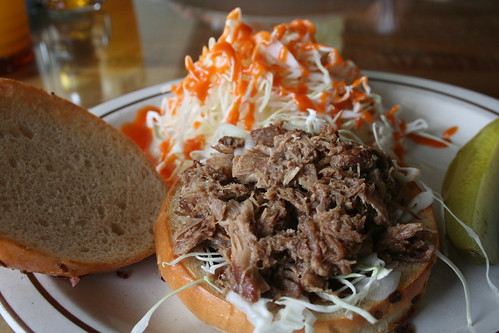
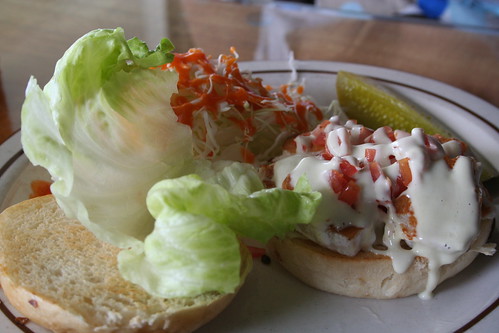
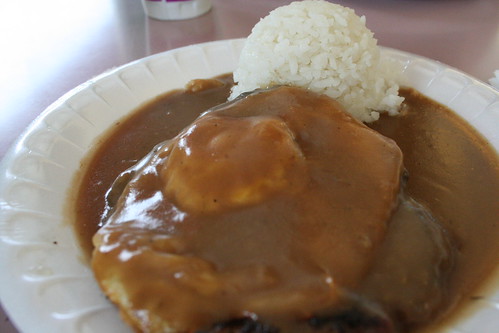
Surprisingly, the most satisfying kalua goes to Kula Sandalwoods Inn & Cafe. It's possible I was desperate for some good pig after the disappointment of Aloha Mix Plate, but this quaint, mellow place in the sleepy town of Kula really hit the spot. I felt a little bad that the place was so empty because it was simple and spot on. The kalua sandwich I had hit all the points on my kalua flavor checklist, plus the clever addition of hoisin sauce to "butter" the bread. Camille's grilled ono sandwich was similarly simple but with the little touch of goodness that is chopped tomatoes. The place is only open for breakfast and lunch, but if you're in Kula (and you should be), you'll be served by the family that owns the place and have a wonderful view of west Maui below you.Some plate places will offer a loco moco all day. You certainly can't go wrong at any time with a loco moco, but it's supposed to be a breakfast dish, and we had a very good one at another Kula stop, Cafe 808.

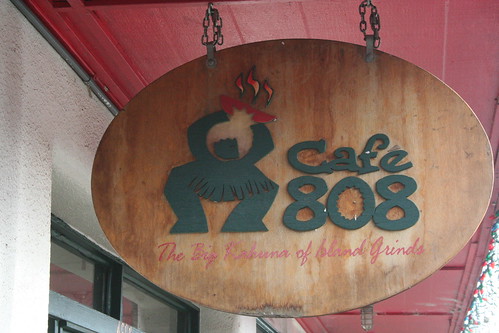
What kind of place is Cafe 808? From what I could tell, it's very no nonsense and caters mostly to locals. They don't even have a website. I mean: THEY DON'T HAVE A WEBSITE!!! If that's not antiquated and cute, I don't know what is. They also use fold up tables, feature some very old wood paneling, and generally have the look of an old community center/gym hybrid. In other words: a hole in the wall. I loved it.

Kidding aside, they make a mean loco moco. Camille and I usually try not to order the same thing for the sake of adventure, but getting up at 3:30 am and racing the sun up to the top of Haleakala in a rented Corolla is adventure enough for us. We wanted filling, we wanted comfort, and we wanted it with a scoop of rice. Enter the loco moco, Hawaii's wonderful entry into the comfort food lexicon. A juicy beef patty topped by a fried egg (cooked to order, I like it runny), and the whole thing bathed in gravy. Those looking for a hearty breakfast can't ask for much more. If I lived in Kula, I'd probably eat here twice day, every day.
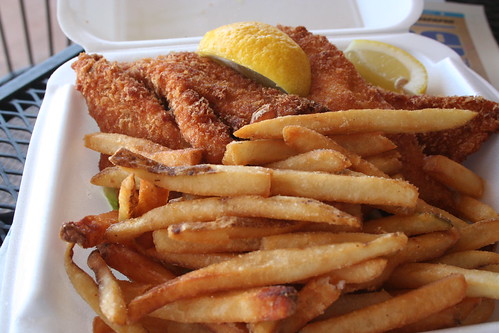
Probably the best bang for your buck as far as plate lunches would go to Honokowai Okazuya & Deli. It's a tiny carry-out place in a strip mall with a Pizza Hut and a AAAAA Rent-A-Space, so it doesn't inspire much to look at it from the street. But the food is on par with most sit down restaurants, and if given the right location and ambience (like, say, the oceanfront locale of that tourist whore, Aloha Mix Plate), the owners could easily charge more. Instead, they pile the stuff into styrofoam boxes with plastic utensils and pass the savings onto you.
I went with the fish 'n' chips. The fish is panko-crusted, which is a delicious change of pace, making it light and crunchy. The real winner, though, is Camille's plate lunch of grilled fish in a lemon, butter, garlic, and white wine sauce. As Camille noted, it easily could have been a $20 dish at an entry-level fine dining establishment if it's served on a plate with real flatware. It's downright sinful as carry-out, rich and savory without being overbearing with the flavors. It wasn't just a pan full of butter -- which is delicious in its own right -- but a balanced combination between the wine, garlic, butter, and lemon. It was damn good.
Sorry, Aloha Mixed Plate, if that "tourist whore" comment seems harsh, but by comparison, you ain't nothing. You are dead to me. Up with Da Kitchen and Okazuya!

Click here to read Part 2: Going Native.

Aloha Mixed Plate
1285 Front Street
Lahaina, HI 96761
(808)661-3322
www.alohamixedplate.com

Old Lahaina Luau (reservations required)
1287 Front Street
Lahaina, HI 96761
(800)248-5828
www.oldlahainaluau.com

Da Kitchen
Rainbow Mall
2439 South Kihei Road #A107
Kihei, HI 96753
(808)875-7782

Triangle Square
425 Koloa Street #104
Kahului, HI 96732
(808)871-7782
www.da-kitchen.com

Kula Sandalwoods Inn & Cafe
15427 Haleakala Highway
Kula, HI 96790
(808)878-3523
www.kulasandalwoods.com

Cafe 808
4566 Lower Kula Road
Kula, HI 96790

(808)878-6874

Honokowai Okazuya & Deli
3600 Lower Honoapiilani Road #D
Lahaina, HI 96761
(808)665-0512
www.mauihawaii.org/restaurants/okazuya.htm

15 April 2008

pan-roasted chicken with li hing mango salsa

Poor Li Hing Mui. Always a bridesmaid, never a bride.

Apparently it's a dried plum. I've never seen it in its natural state. For all I know, it could be the by-product of slipper production deep in mainland China. Or dried lava from the ever-erupting Kilauea volcano. What you'll likely find if you venture into the dark heart of your local Asian market is a bright orange powder that's popular in Hawaii as a coating for dried fruits or candy. A quick Google search uncovers a shortbread, cakes, and li hing as accent on a cocktail. I think it's tremendous stuff. Sweet and sour and savory and really, really good on gummi bears.

But rarely is li hing found in an entree dish of any kind. Perhaps chefs of the world think the sweet-salty tang is too strong for proteins. Aloha Airlines offered a tomato-cucumber salad with ling hing mui vinaigrette from Alan Wong. And then they filed for Chapter 11 bankruptcy and no longer operate passenger service. Coincidence? Hey Alan Wong, the next time an airline asks for a Hawaiian dish for in-flight service, man up and pair li hing with the main course.

In fact, you can take my recipe if you like! I'd tried previously to integrate li hing into a cream sauce. Um... yeah... this isn't that recipe. This one I'm actually kinda proud of.

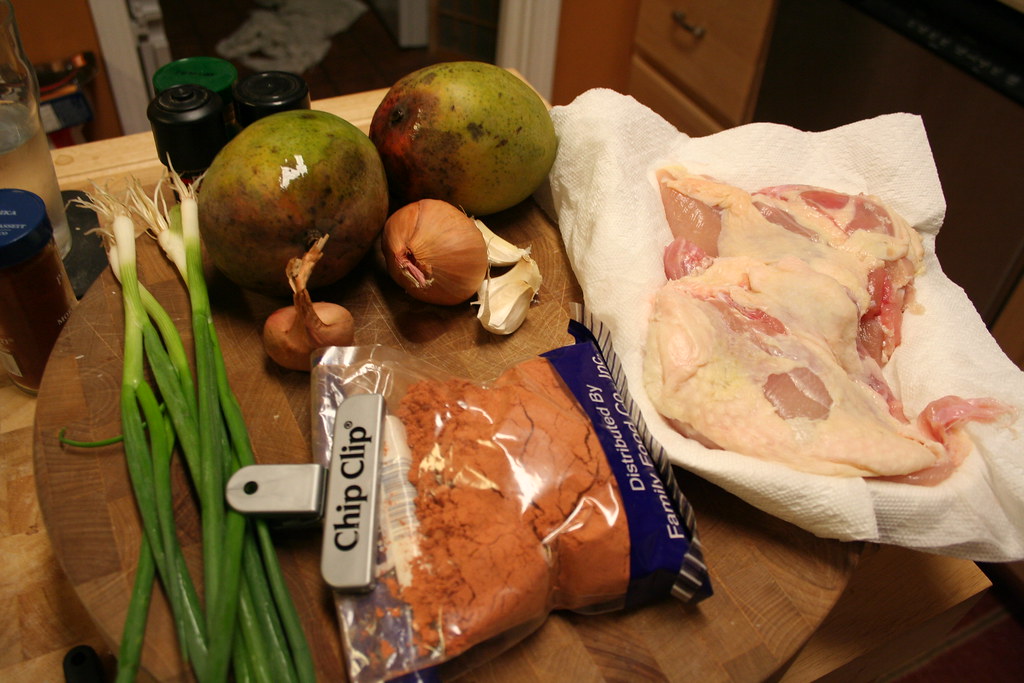
pan-roasted chicken with li hing mango salsa

Ingredients -- 2 servings


2 chicken breasts, bone in and skin on
2 ripe mangos, cubed
2 scallions, chopped
2 shallots, minced
1 garlic clove, minced
5 garlic cloves, smashed
1 tbs. li hing powder
1 tspn. cumin
1 tspn. paprika
salt and pepper
1-2 tbs. olive oil
2 cups rice (optional if you are not Asian)

Equipment
12-inch oven-proof skillet
mixing bowl

Fire up the rice cooker. Preheat oven to 400-degrees. Heat the skillet on medium-low heat with the olive oil.

Season the chicken breasts with the cumin, paprika, salt, and pepper. Place them skin-side down in the pan. It should give a slow sizzle (if not, turn the heat down). The next step after this is the most important: don't f-ing touch the chicken breasts again until we're done. If you value crispy, browned, savory, delicate, heavenly chicken skin, then we're pretty much done here -- just let the heat do its thing. Brown the skin on the stove 4-5 minutes (okay, fine you can peek, but real quick), then transfer to the oven. Pop the smashed garlic cloves into the pan. Roast for about 30-35 minutes.

While you're doing absolutely everything you can to not disturb the chicken, cube/chop/mince the mangos/scallions/shallots/garlic and combine in a bowl. Add the li hing powder and mix. You might want to add the li hing a little at a time and taste it, because a little goes a long way.
When the chicken's done (If you're paranoid about germs and whatnot, the FDA recommended internal temperature is 160-degrees), remove and let cool for a few minutes. Plate and serve.

Maybe I'll be daring enough to actually put the li hing on the chicken directly next time. But until then... huzzah li hing!

06 March 2008

PB&J Trio

I just had peanut butter and jelly sandwiches for an entire day. Four of them. One for breakfast, one for lunch, two for dinner. Camille went out of town on business. What's a Food Network-educated chef to do without someone to cook for? Other than indulge his base desires?

I've always thought the comforting mush that is soft white bread, mashed peanuts, and jam could be dolled up into a pseudo-gourmet novelty. So, after my cheap, lazy ass got through two-thirds of the day with PB&J, I figured I'd go for the trifecta at dinner. And do it Iron Chef style.

PB&J Trio

Ingredients
four slices white bread
peanut butter
strawberry jam
grape jelly
guava jelly
sliced bananas (optional)

Equipment
sandwich maker or panini press

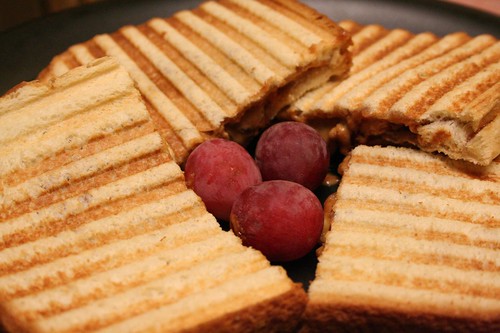
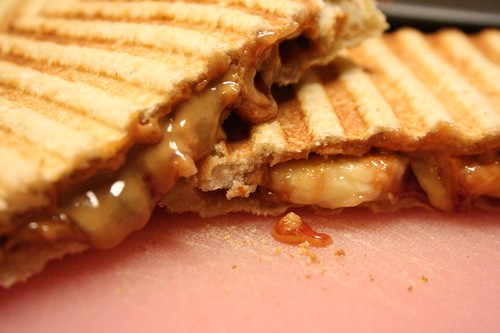
Plug in your machine and preheat. Slather two slices with peanut butter. Slather one slice with your preferred jam. Split the other slice between the remaining two flavors. If you're using a sandwich maker, be judicious with the fillings as they will become a superheated mash that will explode over your face. A panini press does a better job of melding everything together, so if you've got one (and you should), then go crazy.
Add banana slices. Assemble the sandwiches and cook, 3-4 minutes. Let cool a minute before halving. If competing on Iron Chef, plate with a fruit garnish (preferably one representing a jam/jelly) and sprinkle with powdered sugar.

I only used banana slices on half the sandwichs, so it's actually a PB&J Triple Trio. One thing I wanted to accomplish was eat grape PB&J and strawberry PB&J side-by-side and settle that argument once and for all. Of course, I grew up on the strawberry version, so I'm biased. But in my mind and in my mouth, the grape flavor is too distinct and doesn't meld well enough with the peanut butter. In grape's defense, the fact that it was jelly and not jam makes a huge difference. Jellies are generally too sweet and runny.

Interestingly, the bananas really dominated the strawberry jam and guava jelly. The guava was especially eye-opening. I brought the Hawaiian Sun guava jelly back from (drum roll...) Hawaii on my last trip, only to find it was exceptionally sweet. However, against the peanut butter and paired with the banana, the guava flavor almost disappeared and actually served to brighten the banana flavor.

The banana-strawberry was a little underwhelming. The two fruits always go together so well, and here I thought the starch of the banana would balance well with the sweet jam and creamy peanut butter, but the banana flavor tended to dominate. Also, the heat and pressure of being pressed softens the banana texture, effectively turning it into another jam and undermining my scientific hypothesis for including them to give the sandwich some bite. Thankfully, this science experiment still tastes good and remains cheap and comforting. The master stroke of this preparation is the crispy texture of the bread, which turns an old school comfort food into a warm, crunchy-gooey culinary pleasure. That's how I'd describe it if I were on Iron Chef, anyway.

20 February 2008

Surfas Restaurant Supply & Valentine's Day

It seems there's a frozen food for every level of foodie. Convenience stores have those wonderfully cheap Tina's frozen burritos. Supermarkets take it up a notch, with everything from Michelina's (my college preference) to Lean Cuisine and Smart Ones (Camille's work food of choice) to those frozen pasta bags that actually resemble real food after some time in a frying pan. Trader Joe and trader pals Jose, Ming, and Giotto have stuff that you could seriously fool people into thinking was more expensive.

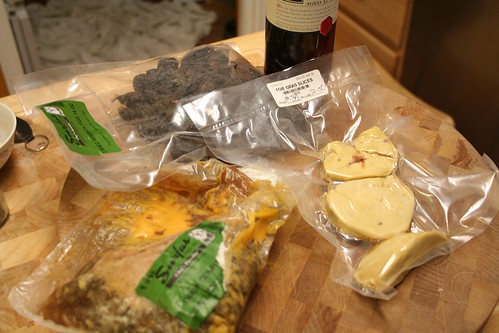
And then there's Surfas Restaurant Supply in Culver City, which is more expensive and could seriously fool people into thinking you're some kind of chef. In fact, when I went to buy my Valentine's Day dinner ingredients, the kindly clerk asked, "Are you a chef?" Apparently, duck confit, dried figs, juniper berries, and foie gras are not the normal purchases of, say, aspiring screenwriting foodies who blog in their spare time.
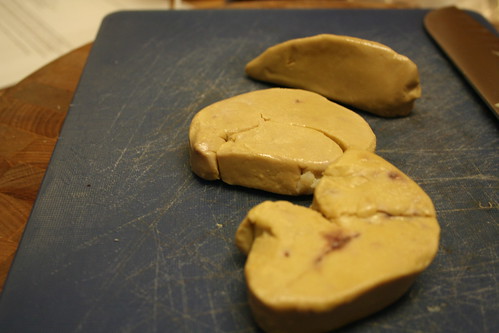
I found Surfas because they are one of the few places in Los Angeles that sells foie gras, which Camille and I tried for the first time a couple months back and which I've been anxious to cook myself. It's insanely delicious, and not just because it makes you sound like a peace-mongering Frenchman when you say it. Rich, creamy, smooth, delicate -- it tastes absolutely sinful. And according to animal rights activists, it is sinful. Look, if these geese and duck had watched The Shawshank Redemption, then they'd know to get busy living and fly away. Really, it's their fault.

Anyway, I'd planned on only buying foie gras, but being in Surfas is being the proverbial kid in the candy store. The fridge and freezer section alone contained numerous items of culinary holiness like creme fraiche, duck fat, rillettes, and, yes, frozen duck confit. Confit is another dish I've wanted to try, except it's one of those things that requires a lot of lead time, what with the curing in salt for days. Now, in the time it took me to grab the frozen duck and foie gras out of cold storage, I had pretty much finished my main dish. And get mistaken for a chef, no less!

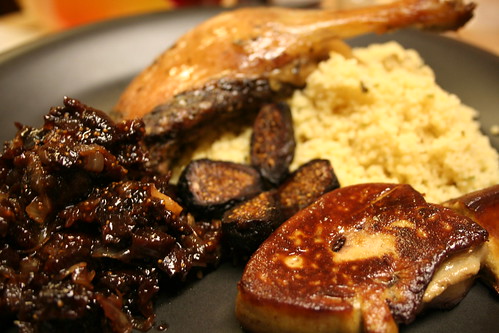
Duck confit, seared foie gras, fig and port charoset, pine nut cous cous.

This dinner is incredibly rich. The duck confit is wonderfully crisp on the outside, juicy within, and savory all over. It could easily be replaced by a lighter poultry dish to help offset the richness of the foie gras and the figs and port. I mean, if you're a wimp like that.

The thing that puts seared foie gras over the top is the texture. Yes, it's creamy and rich, but searing it properly gives it a crust and a lovely bite. It crunches slightly, then melts in your mouth. All geese should have the good fortune of exiting the world in this fashion.

According the the Epicurious recipe I got, the fig and port charoset is apparently a staple of Jewish seder. I don't know anything about that, but it ends up being a sweet, sticky fig chutney mush which works really well as a side dish. Plus, you'll have an open bottle of port begging you to finish it off while you're cooking, which is just fine and dandy.

The first two ingredients are cheats. Of course, cous cous is insanely easy, so it's not much of a shortcut to buy the prepackaged box. As for the confit, there's that curing in salt business. Yeah, no...

Ingredients
2 confit duck legs and thighs
1 package pine nut cous cous
1/3 lb. foie gras (about two 1" slices)
1/2 cub dried figs, chopped
1 medium onion, chopped
1 cup port wine
3 tbs. vegetable oil
1 tbs. butter

Equipment
oven
2 small pots (seriously, who calls small pots "saucepans?")
1 frying pan

Preheat oven to 375.

Place duck confit into the oven and bake 20-25 minutes. Good job, chef.

Combine port and figs in small pot #1, bring to a boil, then reduce to a simmer for 15 minutes. Meanwhile, heat the oil over medium-high heat, add the onions, and cook, stirring often, until the onions lightly caramelize, about 15-20 minutes.

Place the onions in a bowl and let cool slightly, add the port and figs, and mix. Add pepper to taste. Set aside.

Cook the cous cous. It should take about 6 minutes tops.

Turn the oven off, flip on your broiler, and move the duck confit to the top rack just underneath. Broil for 1-2 minutes until the skin is crisp. Remove and let rest.

Wipe down the frying pan (or use a fresh one) and melt the butter over high heat until the bubbles subside. Lay in the foie gras slices and sear for about a minute. Flip and repeat. In order to quasi-sear the sides, tilt the pan so the butter pools in one end, then use your spatula to splash the hot butter over the foie gras. Remove to a paper towel to drain.

Plate and serve.

07 February 2008

BFT is on the Foodie Blogroll!

So, I've been added to the Foodie Blogroll, which is organized by The Left Over Queen. Check her out, or go on a foodie adventure by scrolling through the member blogs in the right margin (underneath my labels).
Huzzah!

06 February 2008

Kare Kare

Get a slow cooker.

If I've learned one thing over the short life of this blog that I can impart, it's that. Get a slow cooker. It's like cooking but... not. For some reason, I used to associate slow cookers with gimmick culinary contraptions like salad shooters, knuckle guards, or the Ronco Food Dehydrator (it makes turkey jerkey!). In fact, it probably does less than all those Magic Bullet-type devices. The only thing it does is slowly but surely heat whatever you put inside it.

But, oh, the magic it did for my latest batch of kare kare.My recent foray into Filipino cooking was inspired by my recent Christmas trip home to the Bay Area. It was the first time I'd ever spent Christmas day without my parents, who flew south for the winter. So, when I wasn't officially upgrading Camille from girlfriend to fiance or playing Guitar Hero, I was watching Camille's mother cook. Because she's the working mother of four kids, she has an amazing shorthand for pinoy dishes that are notoriously laborious. And using only two burners and a turbo cooker, to boot.

I'd previously tried kare kare, the peanut-based oxtail stew, once before using a recipe from Memories of Philippine Kitchens, which has more traditional leanings in terms of flavor and preparation. The recipe calls for an initial stewing to soften the meat and make a broth, cooling overnight to separate the fat for use the next day while cooking an assortment of veggies. It also uses equal portions of peanuts and peanut butter while more contemporary recipes pour on the peanut butter for a richer flavor and texture.

Camille's mom? She cuts onions and minces garlic, tossing them into a hot pot as she goes, then sears off the oxtail, boils it down, dumps a combination of sauce and flavor packets, then the peanut butter, then bok choy and longbeans. Hour and one-half, two hours tops. She has kids, she says.

And it works. It's really good. Sweet and savory, beefy, peanut buttery goodness. The gooey thickness of the peanut butter sauce with balance from the mildly sweet, leafy bok choy and the bite of the green beans. Except the oxtail meat is just a tad too firm. I wanted to do a hybrid of the two methods, but unfortunately there's really no short cut for breaking down beef into a tender, juicy wonder.

Enter the slow cooker.

Ingredients
2 lbs. oxtail, cut into 2-inch pieces
5-6 cloves of garlic, peeled and mashed
2 medium onions, chopped
1 1/2 - 2 cups peanut butter
2 handfuls (about 1 lbs.) longbeans, trimmed and halved
4-5 heads baby bok choy, rinsed
3 tbs. oil
2 eggplants, halved and chopped into 3/4" pieces (optional)
steamed rice

Equipment
slow cooker
large, heavy pot

(I bought a Le Creuset dutch oven a few years back that's big and heavy and beautiful. There are probably cheaper dutch ovens that are reasonably comparable performance-wise, but they ain't as good and they're definitely not as beautiful, and no one brags about their reasonably comparable and ugly dutch oven. My point: go cheap everywhere else, but indulge yourself with at least one Le Creuset.)

My cousin recommended slow cooking overnight, which I did by simply placing the oxtail in, filling the crock pot with water, covering, and setting to low. No need for refrigeration or fat-skimming or any of that. In the morning, the meat was still a touch on the firm side. So, I just left the thing on and went to work.

When I returned home, the oxtail had been slow cooking for about 18 hours, resulting in suitably beefy broth and meat that was fall-off-the-bone tender. Not a figure of speech, it was falling clean off the bone. The fat and cartilage melted away and the meat fiber sloughed off when I tried fishing it out of the crock pot, leaving white, clean bones that looked like a cross between a biplane and an X-Wing fighter. Cool.Set aside the oxtail, heat the oil, and saute the onions and garlic about five minutes. Add the peanut butter and the broth. I used about eight cups of broth, but if it's not enough you can add more later. Let simmer until the peanut butter has incorporated well, then add the oxtail and eggplant. Continue to simmer for about 10 minutes.

Add the longbeans and bok choy and simmer another 10 minutes for the flavors to combine. Taste and adjust the texture to your liking by adding either more broth or more peanut butter.

Portion rice into bowls, then ladle the kare kare into it. Now, all you need is a spoon. Though Camille and I have been on a brown rice kick lately, I found that the dryer, nuttier brown rice wasn't able to soak up the stew as well as white rice.