Chicago takes its name from a French mis-transcription of a Native American word for leeks. In other words, Chicago is named after food. So, when Camille, the lovely girlfriend of Butter Flavored Topping, redeemed a free Southwest ticket to the Windy City, it's only natural that we immediately started to salivate in anticipation.
Our primary planning tool for exploring the city was, of course, movies. Sadly, two out of three movie-inspired tours fell through. The High Fidelity tour of hipster hood Wicker Park was doomed from the start due to a lack of big tourist attractions. Sorry, Rob Gordon, but when it's your first time in a city, you've got to stick to the big draws, don't ya? Camille's intended My Best Friend's Wedding tour of Chicago was rendered incomplete, with only photo stops outside the Drake Hotel and inside Union Station accomplished. It's a shame as I really wanted to do the Chicago River tour. I privately considered Union Station to be a part of The Untouchables tour, anyway, so a Julia Roberts-inspired excursion will have to wait until next time.
Which leaves us with the Ferris Bueller's Day Off tour, which was a success. We hit the Art Institute of Chicago (where Ferris kisses Sloan and Cameron is hypnotized by a girl in Seurat's "A Sunday Afternoon on La Grand Jatte"); Wrigley Field to watch my lowly Giants lose ("Kennedy, Kennedy, Kennedy, Suh-WING batta!"); Sear's Tower ("I think I see my dad."); and Chez Quis, where I proclaimed myself the Sausage King of Chicago. Actually, Chez Quis isn't real, but we had some good eatin'. Speaking of which... The first thing we ate was pizza. People speak of Chicago's deep dish pizza as if it were the little baby Jesus holding his own Holy Grail. After weighing various opinions about which restaurant makes the best pie, we decided to hit up Giordano's Pizza. We pre-ordered and put our names in line for the requisite hour-plus wait, cruised up and down Michigan Ave to kill some time, cursed the fact that we opted for a rental car with our travel package (parking is expensive, pay by the hour hell in this city of fine public transportation), and finally got our table.
 We quenched our thirst with some pretty solid mid-west beer, Leinenkugel's Honey Weiss. I actually didn't have much beer here, sadly, so who knows how this compares, but we were thirsty, it went down easy, and it's called Leinenkugel's. Seriously, with a name like Leinenkugel's in the capital of the mid-west, how can you go wrong? They get bonus points for spelling it "bier."
 We ordered zucchini fritters as an appetizer. Crispy but not oily, kinda burns your mouth like good, freshly deep fried food should, the mild sweetness of zucchini with the bread crumbs... I'm not sure I can fully encapsulate how good these were except to say that the little baby Jesus drinking Leinenkugel's Honey Weiss from his Holy Grail would be pleased.
We ordered the special stuffed pizza, which has sausage, mushrooms, peppers, and onions, plus we added pepperoni because, hey, why not? It's very good, although I didn't have the religious orgasm that most people do. The pizza is stuffed mostly with mozzarella. A lot of mozzarella. It's pretty much like eating a wheel of mozzarella cheese that's been breaded, then covered with a thin layer of sauce. It's good mozzarella, but I was hoping for a little more tomato sauce. The sausage is good stuff, though. Cheese and sausage just might do it for me next time.
We ended up with leftovers that we took back to the hotel. Oddly, our reasonably-priced fancy dancy hotel didn't have a microwave. Ideal location, complimentary breakfast, free happy hour, no microwave. When we wanted to finish off our pizza a couple of nights later, we tried vainly to heat it with a hair dryer. Yeah, not so much. But it did taste mighty good cold. In fact, almost as good as when it was hot, which is a testament to the quality of the ingredients Giordano's uses. The one time in five days I was happy to have a car was our trip out to see Frank Lloyd Wright's home and studio. Along the way (in a roundabout, let's-use-our-car-damnit kinda way) is Hot Doug's, a popular joint that cheerfully refers to itself as "The Sausage Superstore and Encased Meat Emporium." It's the kind of place that has a table for local bands to dump flyers about upcoming gigs or to sell used instruments. There was a line wrapped around the building, but not the same tourist line mobbed around Giordano's. No, with my eavesdropping skills, I knew I was among locals (or, at least, other tourists who chose the cooler, more discriminating Lonely Planet over Let's Go! when buying their travel guides).
Other than pizza, the most talked about Chi Town food is the hot dog, which has a strict recipe of toppings: onions, tomatoes, sometimes cucumbers, sometimes lettuce, sometimes bell pepper, pepperoncini, relish, mustard, and celery salt. Considering the semi-gourmet treatment Hot Doug's has with their various dogs, it can be a little intimidating, but thankfully Hot Doug's loses all pretense of snobbery with kitschy decor and hot dogs wryly named after celebrities. The Keira Knightley is a "fire dog" described as "formerly the Jennifer Garner and Britney Spears." They have fries cooked in duck fat on Fridays and Saturdays. You get the feeling the owner -- I'm gonna go out on a limb and call him Doug -- went to culinary school, got exposed to high end ingredients, then realized, "Wait, I like hot dogs," and created this place. Camille had The Dog with all the proper fixings while I went for The Elvis, a polish sausage with all the fixings, plus sauerkraut. The duck fat fries were a bizarre creation. Camille said she could taste the duck in them. Me, not so much, but the texture of the fries was definitely different. Duck fat is richer, and the fries reflect that. Still crispy, but rich and somehow thick, even though it's a standard cut. If McDonald's fries are a light beer, these duck fat fries are Guinness. Take from that what you will.
The Elvis was juicy, good stuff. The Chicago mix of toppings is all well and good, but the real clincher? The celery salt. Seriously, this is what sets everything apart. It's the icing on a sweet and salty mess of slop. Kinda tangy and sweet, the celery salt really jumps out from the assault of other condiments.
For dinner, we hit up Navy Pier, where there's a cool and, more importantly, free stained glass museum beneath the carnival setting. There's also a free fireworks show. A lot of the food choices were kinda generic (nothing says Chicago like Bubba Gump Shrimp!), but thankfully there was the southern-style Joe's Be Bop Cafe, which enticed me with jambalaya and a live band. Our plans to hit up a genuine Chicago jazz club were pretty low on the list, so we settled in. The Jambalaya was nice with a good amount of spice and great sausage, though everyone around us was having ribs, so I was having buyer's remorse. Camille had the crawfish etouffee, a creamy, buttery, and spicy cousin of gumbo that was very, very good. Now I was downright jealous. Considering the tourist-centric locale, I was afraid the place was going to be flavorless and plain, but the food was good and, surprisingly, so was the jazz. No elevator music here, the place was rockin'.
If you're not keeping score, the standout ingredient after a day and a half of eating is sausage.
I like Chicago.
Click here for Part II.
15 October 2007
Chicago, Part I

03 October 2007
Pseudo-Memories of France
Ah, comfort food. I love a dish that's warm, hearty, savory, and brings back fond memories of my childhood in provincial France playing marbles, cycling, and thumbing my nose at those dimwit American tourists.
By France I am actually referring to quaint little San Lorenzo, California and quaint, ridiculously suburbanized Castro Valley, California (East Bay!) where I never so much as sniffed a French bistro. Probably a good thing as San Lorenzo and Castro Valley are not exactly culinary havens. I did trek to Paris (among other European stops) after graduating college, though. Here's a tip if you're backpacking through Europe on the cheap: Don't go to the Moulin Rouge. I know, I know... I, too, loved Baz Luhrmann's filmic ode to bohemian love, and I, too, have a silly man-crush on Ewan McGregor. Just keep in mind that Montmartre is on the outskirts of Paris, so when you finally get to the Moulin Rouge and realize it costs at least $200 for dinner and the show, you'll smack yourself in the head, decide to pass, and look around and see that there's merde to do in the immediate vicinity. My buddy and I visited the various souvenir shops and settled in at a restaurant across the street that, judging by the English menu, catered to tourists. It was here I had my first croque monsieur, the egg-less sibling of the croque madame. I've tried to replicate it in the past without making bechamel sauce, one of those French "mother" sauces that scare the bejeezus out of a novice cook like me, and boy is that a mistake. Without bechamel sauce, the croque monsieur/madame is just a dry sandwich. So, grab your whisk, it's sauce making time. Your wrist will hurt, but you'll feel like a chef afterwards.
Before you start the sauce, though, start your broiler and place your oven rack right up under it. Huzzah for pretty blue flames! I used a bechamel recipe from Williams-Sonoma. You're basically going to make a roux (French word alert! It's the thickening agent behind every sauce and gravy made from butter and flour. And it's pronounced "rue.") and then whisk in milk and cheese. The recipe calls for gruyere cheese, which is some salty good stuff. If you're wondering if you have to continuously whisk the entire time... yes, absolutely. Do NOT stop whisking! I stopped for ten seconds to peruse the recipe and the sauce burned slightly. Since I'm a lazy mofo, I pushed on with the lightly toasted bechamel. It's still good, it's still good.
If you're saying to yourself, "Butter! Milk! Cheese! How healthy is this?!"  The answer to your question is: You clearly don't love food. Go eat a carrot.
After making the bechamel sauce, the hard work is done. All that's left is to do the math, as we used to say in Calculus (not bragging, I barely passed). Assemble your dish.
Don't buy sliced bread for this. You're not eating it with your hands, so get a nice, fresh bread that'll sop up the sauce but still hold together. In other words, slice it thick. I bought some organic deal from Whole Foods, not because it was organic so much as it was round. Thems round loafs is fancy! It smelled good and was slightly soft. It ended up being some kind of sourdough, which wasn't in the recipe but works splendidly.
I used a croque madame recipe from, yes, Williams-Sonoma, but it called for black forest ham, which I didn't have. I did have a bunch of leftover rotisserie chicken from Costco... perfecto! (Perfecto is not a French word.) Toast the bread first, then pile on chunks of chicken and ladle the bechamel over the whole thing. Top with more grated cheese. Throw it back in the broiler until the cheese begins to melt and brown. At this point, you've pretty much got a croque monsieur that's waiting to be madame-ed. Get a pan with oil going and fry an egg. You probably think you can fry an egg. I used to think so, too. But I never did it the same way twice. Then I realized that once the egg is down in the pan and frying... leave it the hell alone. Let it cook. Don't flip it yet. Just don't do it. Leave it be until the whites are all, you know, actually white. Not partially white. White. If you want over-easy, flip it once. It's not a steak, there's no reason to flip and flip and flip. Cook it through on one side, flip once, cook it to your desired doneness on the other. Camille doesn't like runny yolks, so I let hers go a little longer before flipping to make sure the bottom of the yolk is cooked.
Okay, so the broiler has probably done it's business by now. Take out the sandwich, plate it, top it with an egg. That's it. The recipe calls for topping each piece with another slice of bread to make a sandwich, but the tourist trap eatery across from the Moulin Rouge made it open-faced, and since I'm sentimental, I did the same. The bechamel turns what is otherwise a mundane, dry meat and cheese combination into a rich, creamy, hearty, comforting dish. Savory chicken, tangy bread, cheese... that stuff hits the spot. Even better, as hearty as it is, it doesn't weigh you down. It brings back fond memories of France that I don't really have (damn you, Moulin Rouge! Damn you to hell!). Mmmmm, sentimental sandwich.
23 September 2007
Tony Leung Trio
I was going to recommend the films of Wong Kar-Wai when I had a revelation. I've seen roughly 8 Chinese-language films in my lifetime, and actor Tony Leung (a.k.a. Leung Chiu Wai, if you're of the Asian persuasion) has been in, oh, 7 of them. Whether he's the Kevin Bacon of China or simply an actor whose movies happen to get US distribution, I do not know. What I do know is his presence anchors every film I've seen him in.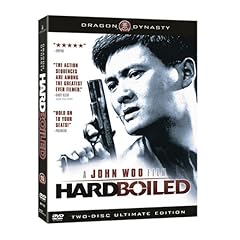

 In Wong Kar-Wai's Chungking Express, Leung gets to stretch his legs and play... a cop. Which is why I will instead be talking about Wong Kar-Wai's In the Mood for Love. In it, Leung plays a writer (ha!) who rents a room next door to a lady played by Maggie Cheung. Both are married, and both come to the realization that their spouses are cheating on them with each other. What unfolds is an endearing friendship that threatens to turn into something more, but both vow never to sink to the level of their unfaithful spouses. This is the type of art house fair that I usually dread, but Wong is a romantic through and through. He infuses his films with real heart and, in this case, real melancholy. Loneliness and unrequited love are staples of his work, and what's heartbreaking about Mood is the fact that both emotions are self-inflicted. Both characters repress their true feelings so as not to shame their already broken marriages. Visually, the film is a splendor. Wong is a master at creating atmosphere, and here he recreates a crowded 1960s Hong Kong with rich colors and a penchant for the Nat King Cole song "Quizas, Quizas, Quizas." At first, it is a little odd to hear Cole crooning in Spanish for this Chinese film, but the images are mesmerizing and the repitition of it is sadly evocative... perhaps, perhaps, perhaps. Leung won Best Actor at the 2001 Cannes Film Festival for his work here.
So there you go. If you're in the mood for a fun Friday night doubleheader, go with Infernal Affairs followed by Hard Boiled (and stay far, far away from the Infernal Affairs sequels). If you want heartbreak and romance, give In the Mood for Love and Chungking Express (which is delightfully romantic) a spin. If you want a dash of science-fiction mixed in with your unrequited love, pick up a copy of Wong Kar-Wai's 2046, a quasi-sequel to Mood that also stars Zhang Ziyi and follows Leung's character as he becomes a cold womanizer who writes a pulp sci-fi novel that mirrors his hedonistic exploits. Like what you've read about Leung but want some kung fu? There's Hero with Jet Li, a visually stunning and dreadfully boring film, but hey, whatever your cup of tea. Action? Love? Subtitles? Tony Leung is your man.
20 September 2007
"Only The Brave" & Kouraku
I really, really wanted to like Only The Brave, an independently-financed film about the most highly decorated unit in US military history, the 100th/442nd Regimental Combat Team comprised of Japanese-Americans, most of whom were sent to internment camps in the wake of the Pearl Harbor attack. It's an amazing story, a uniquely American story, and a real shame that it hasn't been told in the mainstream before. Most World War II texts gloss right over it. The fact that Only The Brave is written and directed by a Japanese-American filmmaker, Lane Nishikawa, makes it all the more significant. And all the more disappointing.
The film is actor-writer Nishikawa's directing debut. It shows, especially during the war scenes, as his camera has trouble navigating the chaos of the battlefield. It's hard to criticize him for not having enough money (narrow-minded film executives are to blame there, but that's another topic), but the budget limitations are evident. Visually, there's little urgency to the war stuff. Which soldiers are where, and where they are going, and what's in their way... it's all muddled and flat.
I'd like to say that the battle sequences are ancillary to the story of these brave volunteer soldiers and their journey from the internment camps to the army, but it isn't. The bulk of the picture is focused on the 100th/442nd's rescue of the "Lost Battalion," a unit surrounded by German forces in October 1944. The entire context of the internment of US citizens for no other reason than racist paranoia is relegated to a crawl of text during the opening moments of the film. If you were to walk in late to this film, you might not know at all that it's about soldiers who overcame blatant discrimination to join the army and serve the very country that maligned and repressed them.
Part of the trouble is the driving force of the film is explored with cryptic strokes. Jimmy, the platoon leader played by Nishikawa, is first seen as a veteran haunted by his memories. However, his relationships with his men are cold and conventional. There's little chemistry between the characters because they do little together save for stalk through the forest. There are poignant flashbacks spread intermittently throughout, featuring each of the soldiers saying their goodbyes to their families. One in particular, with one soldier receiving a "1,000 stitch" scarf that carries the well wishes of an entire community, strikes a heartbreaking cord. These share other details and give some shading to what are otherwise faceless soldiers, but they aren't enough to sustain the prolonged battle sequences and serve only to convolute Jimmy's story.
It's evident that Nishikawa wants to honor the veterans of the 100th/442nd by telling their story without melodramatic touches or fifty years of hindsight. The tone of the film is stoic, immediate, and the filmmaker has a fondness and a good ear for the soldiers' banter between battles. However, as a whole, it all feels raw and incomplete. Jimmy's haunted looks are never fully explored, undermining an intriguing absolution. As a historical retelling, Only The Brave misses the mark, and as drama it's convoluted and underdeveloped.
The Los Angeles screening I went to was the kick-off of a national tour promoting the DVD. Visit the film's website for more info.
After the film, Camille and I wandered through J-Town looking for some eats. (Isn't "J-Town" much cooler than "Little Tokyo?" Come on, try it on for size.) We thought the wise thing to do was follow a crowd, so we walked into Kouraku, a quaint place with the menu written in dry erase on the wall and counter seating fronting the kitchen. Of course, the dry erase wall menu was in Japanese, so we had to peruse the surprisingly vast table menus. They seem to specialize in noodles, so we both went for ramen with an appetizer of squid cooked in butter.
Squid can easily become rubbery and gross, but here it was fresh, soft but with a nice bite, and butter-rific. I don't think I can overemphasize how deliciously buttery the butter on the butter squid is. Butter butter butter. So simple and fantastic.
I went for a shrimp omelette ramen in a soy-flavored broth. First and foremost, the broth brings the goodness. Warm, smooth, and a touch sweet and salty. While I'm a tremendous fan of putting a fried egg on pretty much anything, I've never considered making an omelette... and then dropping it onto soup. The shrimp omelette by itself would have done the job, but the plain sweet flavor of the shrimp and egg in the middle of a rich broth, combined with the soft noodles is thoroughly satisfying.
Camille had a more hodgepodge soup that contained an array of proteins in a different kind of broth. I think satisfying is probably the best word for this food. Not fantastic. Not mind blowing. Satisfying. Looking at the menu, it's enticing to see that every soup dish describes the different broth they use. I think we'll be coming back.

314 East Second Street
LA 90012
213.687.4972
cash only
04 September 2007
With a name like Swagger...
Sometimes, Taco Bell just does it for you. Maybe you've only got a few bucks on you, or maybe you're drunk -- which is the preferred state for eating a double decker taco -- but sometimes you don't want quality. Not even McDonald's-level quality. You just want a double decker taco.
Shooter is a double decker taco. It's directed by Antoine Fuqua, whose magnificent Training Day is a whopper of a dirty cop thriller (pun intended, thank you). But Shooter, on the other hand, is dull and workman-like. It's not bad, per se, but you've got to be in a specfic mood to really enjoy something as exceedingly mediocre as this. Drunk, for example. Or up late, eyes buzzing with caffeine while channel-surfing madly through infomercials hoping for something decent at 2 am that isn't Law & Order reruns on TNT. You see what I'm getting at here.
One of Mark Wahlberg's criteria for picking out scripts must be really spot-on character names. There exists no better porn star name than Dirk Diggler, and I really can't come up with a better moniker for a sharpshooter than Bob Lee Swagger. Of course, while I like Wahlberg, the last thing I'd say about him is that he oozes charisma. So, in the misnomer department, Swagger is up there with Pussy Galore from Goldfinger. But it's still a cool name. So cool, it should be written with an exclamation point -- Swagger!
Swagger! is depicted as an earnest, loyal, simple man. During an operation, he and his spotter are left behind. Since the spotter just showed a picture of his girl mere moments before, War Movie Doctrine dictates that he tragically die, and so it goes. Swagger! escapes and moves to the mountains to become a sharp-shooting yokel, and there he stays until Danny Glover (whose character name is so bland I cannot recall it) arrives with a job: Figure out how to assassinate the President and, in doing so, track a rogue assassin plotting to do so. Swagger! is set up but escapes, embarrassing a young FBI Agent (Michael Pena) who begins to suspect Swagger! is just a fall guy.
Fuqua is a confident director who's shown real flair in the past, but he doesn't do much to elevate Shooter above it's generic trappings. The writing is strangely concerned with making Swagger! smart and resourceful, which is Screenwriting 101 for creating character, but the end result is a thriller in which there are few thrills since the bad guys can't match wits with a good-hearted killing machine like him. Swagger's got this. I mean, his name's Bob Lee Swagger!
The film is a throwback to the straight-arrow action films of the 1980s. In fact, substitute the story's post-9/11 government paranoia with communists and you'd have Red Dawn, right down to the sharp-shooting yokels camping in the woods. At the end of the day, I think I prefer Red Dawn's shameless 80s sincerity. That movie at least knew in its heart that the villains didn't really matter, it was the struggle of teenaged kids banding together to survive World War III. Shooter loses it's steam at the most crucial of points, the very end, when the story suddenly shifts from Swagger clearing his good name to the filmmakers wagging their fingers at morally-corrupt capitalist bureaucrats. By the time you realize what they've done for money (no, not for money! Evil!), you'll probably want the credits to roll. There's actually a sequence where Swagger lets the bad guys go so they can be properly shamed in a government hearing. Which they don't, but hey, we're talking about Bob Lee Swagger! Suffice to say, this is the least satisfying comeuppance a villain has ever had.
Yet, I cannot condemn the flick as bad. It's decent. It moves quickly. The action is nifty. Not spectacular, or terribly exciting, but nifty. Sure, Michael Pena becoming Swagger's new spotter is one big ball of cheese, as is the quasi-romance that blooms when Swagger seeks refuge with his old spotter's heartbroken girl. But every time Wahlberg, I mean Swagger!, offs a baddie with his sharp-shooting skills, it's oddly satisfying. Double decker with mild sauce satisfying. And with just as much guilt on my part.


