That's bu-la-LO. Don't worry, the first time I read it, I mispronounced it, too.
I really enjoy the notion that food is true living history, even though 99% of the time it's, you know, dead. The term "comfort food" doesn't quite capture what happens when a dish not only works on your senses and sentiments, but connects you to a culture. Especially when said culture is "your" culture. Nostalgia from childhood is one thing. Realizing that thousands of people for centuries have eaten what you're eating is oddly transcendent.
I'm a first generation Filipino-American. I don't speak Tagalog. I despise pinoy movies. Some of the food even scares me. At least, it used to. My mom didn't make too many Filipino dishes while I was growing up, but one staple she always fell back on is bulalo. I did reference a recipe when I made it recently, but I mainly went along with my mom's beautifully simple directions. Beef shank. Bones. Water. Cook it.
It's about two parts water to one part beef material, then reduce it down and taste as you go. Whole peppercorns and sliced onions add a nice layer of flavor, but really all you're making is beef broth that's savory and rich from the bone marrow and melted fat. While it's probably a good idea to skim some of the fat, that's precisely what makes bulalo into lip-smackingly good stuff. Toss in some cabbage and potatoes to go along with the tender, stewed beef, and then ladle the stuff over rice, and you've got a cheap meal fit for fine, upstanding immigrants. Suddenly, I was ten again. I specifically remember my dad spooning and eventually sucking the marrow out of the bone. This always freaked me out to no end, but now I know better. The bone marrow is by far the best part of the dish. It's where the flavor in the broth comes from. Camille and I tried foie gras recently, the fattened goose liver that's always prevalent in the menus on Top Chef. It's creamy and rich, well deserving of it's reputation.
Stewed beef marrow is kinda like that. Concentrated, decadent, fatty beef flavor. Not quite as creamy, but just as guilt-inducingly good. I don't know what kind of fat and cholesterol takes to my veins after eating this dish. I don't want to know. All I wanted to think about after scraping the last vestiges of marrow from the bone was more efficient ways to get it out from inside the hollow. If you handed me a stewed bone and a wide straw, I'd totally go for it.
17 January 2008
Bulalo

09 January 2008
Bacon Days, Part 2: Bacon-Wrapped Scallops
 Oddly, I can't think of a restaurant where I've had bacon-wrapped scallops, or even a cooking shown where I've seen it prepared. I certainly didn't invent them, but somehow it's entered my bag of tricks. Maybe because it looks fancy and makes a good impression. Though it's a little time-consuming because of the bacon, it's pretty straightforward.
I use the frozen scallops from Costco, which are actually pretty large. Each one's about two or three bites, so while I think of it as an appetizer, three or four of these bad boys on a plate with some greens and some vegetables would make a solid meal, too. The light sweetness of the scallops and the savory, rich, crispy bacon are a natural fit. It's light and fatty surf and turf (kind of). And I'm telling you, it's a conversation starter.
16 scallops (1 bag from Costco), thawed. Fresh is nice, too.
16 slices of bacon. Most packs of bacon are not 16 slices, so you're screwed here. Buy two.
16 toothpicks. These also don't come in boxes of 16, so you're screwed again.
Obviously, you can make more or less, but you're pretty much guaranteed to have extra bacon or extra scallops and definitely extra toothpicks.
Be sure to remove the toothpicks you need before you touch anything raw, or else you'll end up with 484 toothpicks with raw bacon/scallop juice drying on them.
Cook the bacon first. You can do this in a frying pan, but I'd recommend cooking them in the oven. Especially if you have one of those oven grill pan deals that'll let the bacon fat drip down into a pan. A lot easier.
So, preheat your oven to 350 while you're getting everything else together, and then cook the bacon 4-5 minutes, about halfway. Don't cook them all the way as you want them pliable. They should turn from their raw, pale pink into a slightly-cooked, pale light brown. Set aside and let cool.
Heat a frying pan on high heat.
Once the bacon is cool enough to handle, tightly wrap one slice around each scallop, securing with a toothpick. Revel in their beauty.
Make sure the pan is hot, then cook in batches. Sear, cooking about 3-4 minutes on each side until browned. The scallops will shrink slightly and little gashes will open up. Cook until the juices stop running. Set aside to cool slightly. Season with salt and pepper if you want, but you don't need to.
If you're feeling saucy, lay down a bed of greens on a plate and place the scallops on top. Serve and revel in your guests' gushing remarks of your culinary prowess.
Orange-Cranberry Sauce (Eat it, Williams-Sonoma!)
I can't remember a Thanksgiving where someone in my family actually made cranberry sauce. We've had roasted turkey and deep fried turkey and turducken with all sorts of stuffing and sides, but never a homemade cranberry sauce. After a lifetime of this, I just assumed a homemade cranberry sauce was too difficult or simply never compared to the scientists at General Mills or whoever makes those store-brand cranberry-flavored jelly-type substances.
In recent years, Camille and I have resorted to a $10 jar of orange-cranberry relish from Williams-Sonoma. It's mighty good, but for our recent Christmas party I bought a package of fresh cranberries to make my own cranberry sauce.
Well, it didn't happen for the party, but I finally did it. We had turkey breast in the freezer (also left over from the party) so I finally took my crack at the elusive cranberry.
And boy, oh boy, it was exceptionally easy. So easy, I nailed it on the first pass. And it's good.
Seriously, this is the first attempt. Go ahead, jar it up and sell it for $10 a pop if you want.
3 tablespoons butter
2 small yellow onions, chopped
12 oz. (1 bag) of fresh cranberries
1 1/4 cups sugar
3 clementine oranges or 1 regular orange, roughly chopped.
salt, to taste
In a pan over medium-high heat, melt the butter. Add the onions and saute 4-5 minutes. Add the cranberries. Cook, stirring occasionally, until the cranberries begin to burst and break down into a sauce. Add the sugar and continue to cook for 2-3 minutes. Add the oranges and cook about another minute or until the sauce has thickened to your liking. Add salt, to taste.
See? I told you it was easy. This must be what it felt like to have "invented" bottled water.
05 January 2008
Bacon Days, Part 1: Bacon-Wrapped Hot Dog
When you start a conversation about hot dogs in Los Angeles, talk invariably turns to Pink's. And, in a way, Pink's does represent all that is Hollywood. Lots of glamor, lots of hype, and an ultimately empty experience. Pink's is like watching a cool trailer for a big summer movie 10 months in advance, waiting with dreams of how awesome it will be, and clawing for seats on opening night, only to realize it involves an annoying CGI character named Jar Jar who speaks quasi-ebonics with a cartoon Jamaican accent. In a word: disappointing.
While I plan to do some serious, in-depth hot dog research, just off the top of me head I'll name four hot dogs better than Pink's: The Wiener Factory in Sherman Oaks, Dodger Dogs at Dodger Stadium, Costco Polish Sausage at your local Costco Wholesaler (yes, THAT Costco Wholesaler), and the bacon-wrapped hot dog carts orbiting most sporting events.
Over-RATED! (clap-clap, clap-clap-clap)
Over-RATED! (clap-clap, clap-clap-clap)
Back to the bacon-wrapped dog, which apparently is a Mexican creation. If you don't think encased meat encased in more meat is appetizing, also consider that the kindly, Spanish-speaking illegal immigrant purveyors typically transport the dogs, sliced onions, and sliced bell peppers in used plastic grocery store bags, untying and dumping as needed. This is probably why the LA County Department of Health folks don't give permits for such things. But don't worry you're pretty little nose off with such details. If the kindly, Spanish-speaking illegal immigrant asks if you want it with everything, "everything" typically includes grilled onions and peppers, mayonnaise, and mustard. The dog itself is pretty standard fare, most likely whatever was on sale that week at Ralph's or Vallarta or the back of some truck. It's the crispy bacon coating that elevates the entire affair to high levels of sublime. It provides a crunchy texture, a fatty richness, saltiness, and a seared smokiness. The bacon brings bite. It turns an everyday, ordinary hot dog into a... well, a multi-layered extravaganza of animal parts that you wouldn't otherwise eat. The bell peppers provide sweetness, the onions do that airy heat thing that onions do, the mustard adds a little tang, and the mayo goes all mayo on you.
 It's victory in a bun. If these people sold horchata, I'd probably get lost in a daze of culinary goodness and stumble into traffic.
UPDATE: Bacon-wrapped hot dog vendors fight for their rights!
The Fountain
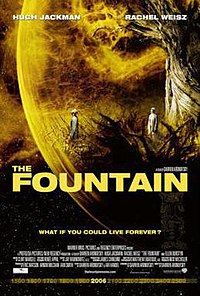
Pardon my French, but Darren Aronofsky sure knows how to fuck with people's heads in an immediate way. He's a director with a distinct visual style that manages to capture emotions with striking, visceral imagery. I haven't seen the film that made his name, Pi, but I distinctly remember watching his lyrical ode to self-destructive addiction, Requiem for a Dream. If you haven't seen it, let me summarize my initial feelings once the credits roll: "Fuck me." You will want to go into the shower, curl into a ball, and cry like a starving, sick little African child after watching Requiem. Yes, that is a recommendation. And again, pardon my French.
Inside of a minute, Aronofsky establishes The Fountain's theme of circles in about ten different ways. The circular head piece of a staff, the crown of a queen, a crest in the floor. Circles, circles everywhere. He's not shy about letting the audience know that this film isn't a one-way trip. There's the past story about the Spanish conquistador looking for the Tree of Life, the present-day story of a doctor looking to cure his wife's cancer, and the future story of the strangest damn astronaut you ever did see using the Tree of Life as a spaceship to reach a nebula of life-giving stars. And it's not even that simple. Each story affects the others in direct and indirect ways, some you see coming, others completely unexpected. Aronofsky and his co-writer, Ari Handel, maintain an emotional and symbolic logic to drive the story. It doesn't make sense, per se, but it maybe kinda sorta sometimes does.
While there are distinct parallels between the future, past, and present stories, the present day vignette could have existed as a film all by itself, especially since the "past" story is actually a novel-in-progress in the present. What I especially appreciated is how tapped in it is to raw, strong emotions. It's involving and heartrending, with Thomas's desperation consuming him. His drive to cure his wife is what keeps him at work and away from her. His desperation is palpable. I don't know why Hugh Jackman isn't a bigger star than he is, because he's terrific. (Plus, his name is Hugh Jackman. He can go up to girls and say in his exotic Aussie accent, "Hey, baby, I've got a Hugh Jackman, if you know what I'm saying. Don't Hugh wanna be Jackman'ed?" By the way, why do future sci-fi protagonists always speak American English? Why not the Queen's English or Aussie? Or, God forbid, something other than English?)
Where The Fountain leaves you wanting more is, unfortunately, the 3rd act. It's something in the vein of 2001: A Space Odyssey, an ending that makes sweeping, bold thematic gestures without giving the ripe emotional undercurrent of the preceding scenes. It's not a cheat or a trick, but it's not wholly satisfying either. I was mostly perplexed, but not to the point of not caring. The film sticks with you because it's a mind bender with an emotional core. It leaves the job of connecting the dots to the audience, and in turn, has you thinking about the things people pursue, the ceaseless drive towards finishing, and the links between the end of something and the beginning of something else.
It's like finding an old puzzle and putting it together, only to realize you're missing quite a few pieces. The big picture is there, you can see it, but it'd be nice to have it all down. And maybe after repeat viewings the other pieces will emerge. The good news is I want to find them.


