I was going to recommend the films of Wong Kar-Wai when I had a revelation. I've seen roughly 8 Chinese-language films in my lifetime, and actor Tony Leung (a.k.a. Leung Chiu Wai, if you're of the Asian persuasion) has been in, oh, 7 of them. Whether he's the Kevin Bacon of China or simply an actor whose movies happen to get US distribution, I do not know. What I do know is his presence anchors every film I've seen him in.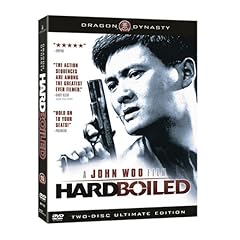

 In Wong Kar-Wai's Chungking Express, Leung gets to stretch his legs and play... a cop. Which is why I will instead be talking about Wong Kar-Wai's In the Mood for Love. In it, Leung plays a writer (ha!) who rents a room next door to a lady played by Maggie Cheung. Both are married, and both come to the realization that their spouses are cheating on them with each other. What unfolds is an endearing friendship that threatens to turn into something more, but both vow never to sink to the level of their unfaithful spouses. This is the type of art house fair that I usually dread, but Wong is a romantic through and through. He infuses his films with real heart and, in this case, real melancholy. Loneliness and unrequited love are staples of his work, and what's heartbreaking about Mood is the fact that both emotions are self-inflicted. Both characters repress their true feelings so as not to shame their already broken marriages. Visually, the film is a splendor. Wong is a master at creating atmosphere, and here he recreates a crowded 1960s Hong Kong with rich colors and a penchant for the Nat King Cole song "Quizas, Quizas, Quizas." At first, it is a little odd to hear Cole crooning in Spanish for this Chinese film, but the images are mesmerizing and the repitition of it is sadly evocative... perhaps, perhaps, perhaps. Leung won Best Actor at the 2001 Cannes Film Festival for his work here.
So there you go. If you're in the mood for a fun Friday night doubleheader, go with Infernal Affairs followed by Hard Boiled (and stay far, far away from the Infernal Affairs sequels). If you want heartbreak and romance, give In the Mood for Love and Chungking Express (which is delightfully romantic) a spin. If you want a dash of science-fiction mixed in with your unrequited love, pick up a copy of Wong Kar-Wai's 2046, a quasi-sequel to Mood that also stars Zhang Ziyi and follows Leung's character as he becomes a cold womanizer who writes a pulp sci-fi novel that mirrors his hedonistic exploits. Like what you've read about Leung but want some kung fu? There's Hero with Jet Li, a visually stunning and dreadfully boring film, but hey, whatever your cup of tea. Action? Love? Subtitles? Tony Leung is your man.
23 September 2007
Tony Leung Trio

20 September 2007
"Only The Brave" & Kouraku
I really, really wanted to like Only The Brave, an independently-financed film about the most highly decorated unit in US military history, the 100th/442nd Regimental Combat Team comprised of Japanese-Americans, most of whom were sent to internment camps in the wake of the Pearl Harbor attack. It's an amazing story, a uniquely American story, and a real shame that it hasn't been told in the mainstream before. Most World War II texts gloss right over it. The fact that Only The Brave is written and directed by a Japanese-American filmmaker, Lane Nishikawa, makes it all the more significant. And all the more disappointing.
The film is actor-writer Nishikawa's directing debut. It shows, especially during the war scenes, as his camera has trouble navigating the chaos of the battlefield. It's hard to criticize him for not having enough money (narrow-minded film executives are to blame there, but that's another topic), but the budget limitations are evident. Visually, there's little urgency to the war stuff. Which soldiers are where, and where they are going, and what's in their way... it's all muddled and flat.
I'd like to say that the battle sequences are ancillary to the story of these brave volunteer soldiers and their journey from the internment camps to the army, but it isn't. The bulk of the picture is focused on the 100th/442nd's rescue of the "Lost Battalion," a unit surrounded by German forces in October 1944. The entire context of the internment of US citizens for no other reason than racist paranoia is relegated to a crawl of text during the opening moments of the film. If you were to walk in late to this film, you might not know at all that it's about soldiers who overcame blatant discrimination to join the army and serve the very country that maligned and repressed them.
Part of the trouble is the driving force of the film is explored with cryptic strokes. Jimmy, the platoon leader played by Nishikawa, is first seen as a veteran haunted by his memories. However, his relationships with his men are cold and conventional. There's little chemistry between the characters because they do little together save for stalk through the forest. There are poignant flashbacks spread intermittently throughout, featuring each of the soldiers saying their goodbyes to their families. One in particular, with one soldier receiving a "1,000 stitch" scarf that carries the well wishes of an entire community, strikes a heartbreaking cord. These share other details and give some shading to what are otherwise faceless soldiers, but they aren't enough to sustain the prolonged battle sequences and serve only to convolute Jimmy's story.
It's evident that Nishikawa wants to honor the veterans of the 100th/442nd by telling their story without melodramatic touches or fifty years of hindsight. The tone of the film is stoic, immediate, and the filmmaker has a fondness and a good ear for the soldiers' banter between battles. However, as a whole, it all feels raw and incomplete. Jimmy's haunted looks are never fully explored, undermining an intriguing absolution. As a historical retelling, Only The Brave misses the mark, and as drama it's convoluted and underdeveloped.
The Los Angeles screening I went to was the kick-off of a national tour promoting the DVD. Visit the film's website for more info.
After the film, Camille and I wandered through J-Town looking for some eats. (Isn't "J-Town" much cooler than "Little Tokyo?" Come on, try it on for size.) We thought the wise thing to do was follow a crowd, so we walked into Kouraku, a quaint place with the menu written in dry erase on the wall and counter seating fronting the kitchen. Of course, the dry erase wall menu was in Japanese, so we had to peruse the surprisingly vast table menus. They seem to specialize in noodles, so we both went for ramen with an appetizer of squid cooked in butter.
Squid can easily become rubbery and gross, but here it was fresh, soft but with a nice bite, and butter-rific. I don't think I can overemphasize how deliciously buttery the butter on the butter squid is. Butter butter butter. So simple and fantastic.
I went for a shrimp omelette ramen in a soy-flavored broth. First and foremost, the broth brings the goodness. Warm, smooth, and a touch sweet and salty. While I'm a tremendous fan of putting a fried egg on pretty much anything, I've never considered making an omelette... and then dropping it onto soup. The shrimp omelette by itself would have done the job, but the plain sweet flavor of the shrimp and egg in the middle of a rich broth, combined with the soft noodles is thoroughly satisfying.
Camille had a more hodgepodge soup that contained an array of proteins in a different kind of broth. I think satisfying is probably the best word for this food. Not fantastic. Not mind blowing. Satisfying. Looking at the menu, it's enticing to see that every soup dish describes the different broth they use. I think we'll be coming back.

314 East Second Street
LA 90012
213.687.4972
cash only
04 September 2007
With a name like Swagger...
Sometimes, Taco Bell just does it for you. Maybe you've only got a few bucks on you, or maybe you're drunk -- which is the preferred state for eating a double decker taco -- but sometimes you don't want quality. Not even McDonald's-level quality. You just want a double decker taco.
Shooter is a double decker taco. It's directed by Antoine Fuqua, whose magnificent Training Day is a whopper of a dirty cop thriller (pun intended, thank you). But Shooter, on the other hand, is dull and workman-like. It's not bad, per se, but you've got to be in a specfic mood to really enjoy something as exceedingly mediocre as this. Drunk, for example. Or up late, eyes buzzing with caffeine while channel-surfing madly through infomercials hoping for something decent at 2 am that isn't Law & Order reruns on TNT. You see what I'm getting at here.
One of Mark Wahlberg's criteria for picking out scripts must be really spot-on character names. There exists no better porn star name than Dirk Diggler, and I really can't come up with a better moniker for a sharpshooter than Bob Lee Swagger. Of course, while I like Wahlberg, the last thing I'd say about him is that he oozes charisma. So, in the misnomer department, Swagger is up there with Pussy Galore from Goldfinger. But it's still a cool name. So cool, it should be written with an exclamation point -- Swagger!
Swagger! is depicted as an earnest, loyal, simple man. During an operation, he and his spotter are left behind. Since the spotter just showed a picture of his girl mere moments before, War Movie Doctrine dictates that he tragically die, and so it goes. Swagger! escapes and moves to the mountains to become a sharp-shooting yokel, and there he stays until Danny Glover (whose character name is so bland I cannot recall it) arrives with a job: Figure out how to assassinate the President and, in doing so, track a rogue assassin plotting to do so. Swagger! is set up but escapes, embarrassing a young FBI Agent (Michael Pena) who begins to suspect Swagger! is just a fall guy.
Fuqua is a confident director who's shown real flair in the past, but he doesn't do much to elevate Shooter above it's generic trappings. The writing is strangely concerned with making Swagger! smart and resourceful, which is Screenwriting 101 for creating character, but the end result is a thriller in which there are few thrills since the bad guys can't match wits with a good-hearted killing machine like him. Swagger's got this. I mean, his name's Bob Lee Swagger!
The film is a throwback to the straight-arrow action films of the 1980s. In fact, substitute the story's post-9/11 government paranoia with communists and you'd have Red Dawn, right down to the sharp-shooting yokels camping in the woods. At the end of the day, I think I prefer Red Dawn's shameless 80s sincerity. That movie at least knew in its heart that the villains didn't really matter, it was the struggle of teenaged kids banding together to survive World War III. Shooter loses it's steam at the most crucial of points, the very end, when the story suddenly shifts from Swagger clearing his good name to the filmmakers wagging their fingers at morally-corrupt capitalist bureaucrats. By the time you realize what they've done for money (no, not for money! Evil!), you'll probably want the credits to roll. There's actually a sequence where Swagger lets the bad guys go so they can be properly shamed in a government hearing. Which they don't, but hey, we're talking about Bob Lee Swagger! Suffice to say, this is the least satisfying comeuppance a villain has ever had.
Yet, I cannot condemn the flick as bad. It's decent. It moves quickly. The action is nifty. Not spectacular, or terribly exciting, but nifty. Sure, Michael Pena becoming Swagger's new spotter is one big ball of cheese, as is the quasi-romance that blooms when Swagger seeks refuge with his old spotter's heartbroken girl. But every time Wahlberg, I mean Swagger!, offs a baddie with his sharp-shooting skills, it's oddly satisfying. Double decker with mild sauce satisfying. And with just as much guilt on my part.
31 August 2007
"One bag, plus the guns. I'll make pancakes."
Through divine intervention (or a friend of a friend), I managed to watch the pilot for Fox's slated 2008 hour-long show, Terminator: The Sarah Connor Chronicles. That's T:tSCC for you geeks.
I love Terminator and T2, and I'm very happy that the rumored third film never came to fruition. Whatever did happen to that alleged third film? I could've sworn it was shot, but for some reason I can't recall any of it. Kinda like the prequel Star Wars trilogy George Lucas said he'd do but hasn't yet. Boy, I hope the rumors are true and Lucas casts Leo DiCaprio as Anakin Skywalker. He'd be good. Anyway.
For the fans out there, your worst fears have not come true. The pilot (which I hear is undergoing reshoots) is solid. It actually kicks some ass. The opening shot is of those familiar headlights on a dark road, which dovetails into a Sarah Connor nightmare that recalls more iconography -- nuclear holocaust and T-800 skeletons. The show quickly settles down to reveal the strict, regimented life of Sarah and John. Sarah's nightmare has sufficiently spooked her into wanting to take John and run from a home that includes a sweet fiancee. Despite John's protests, Sarah coldly tells her son, "No one is ever safe. Half an hour. One bag, plus the guns. I'll make pancakes."
While I'm pleasantly surprised that the official title of the show has "Terminator" in it, it really should be called The John Connor Chronicles, because at this point the writing begins to focus on the dilemma of the future savior of mankind: be a kid or be a soldier. As played by Thomas Dekker (who had the recurring guest role of Hayden Panettiere's friend Zach on Heroes), John is torn between the allure of a normal teen-aged life and the dire warnings of his mother. He has an easy chemistry with Summer Glau, who plays a cute girl named Cameron (as in James) at John's new school. His awkward confession about his parents is sweet and endearing, and is the kind of emotional territory the show can use as a solid foundation.
And just as I'm appreciating the emotional groundwork the pilot is laying, shit hits the fan. By the end of the pilot, the requisite good and bad terminators have appeared. The clever aspect of having the show from Sarah and John's point of view is that constant, ominous threat every other human provides. Anyone can be a terminator in this world.
The action is almost non-stop from the point the terminators come into the story, and this is where the pilot really clinched my fanboy adoration. There's a distinct feeling that writer Josh Friedman and director David Nutter truly love and respect James Cameron's original world. The hand-to-hand fight choreography between the terminators distinctly mirrors the face-offs between Arnold and the T-1ooo. Miles Dyson's wife and son ("Danny? Dann-eeeee!") have a brief but heart-wrenching reunion with Sarah, who they think murdered Miles. The original films' linchpin is a time machine that is never seen, but Friedman cleverly works it into the pilot's plot. But the show doesn't just want to rehash what Cameron did. One inspired sequence toward the end of the episode has the good terminator assembling hidden gadgets into a ridiculously cool weapon, and it's revealed that an engineer from the future was sent back to the 1960s explicitly to build and plant technology that can be retrieved in the 1990s. There's an underlying excitement in exploring new aspects of the original world that's very alluring.
While one staple of the films -- epic, kinetic action sequences -- is hindered by the TV budget, there's enough tension and invention in the writing to make the production go. And the true core of the story, the mother-son relationship, is dealt with in quiet, endearing exchanges. While some of the dialogue errs on the cheesy and a subplot involving an FBI agent on Sarah's trail appears to already be running out of steam (how long can he NOT believe Sarah's crazy tale of the future?), there's good stuff here. And while this picks up where T2 left off, it sure feels like the show will end up rewriting that third movie that we don't talk about and doesn't exist. I'm not quite certain what these characters will be doing on a weekly basis, as their search for who picked up Skynet's research isn't given a lot of momentum in this pilot. But these characters are alive and well, so I'll be back... er, I'll be down for watching more.
PS - If you want to quibble about story continuity... it's fine. The 1992 film actually does take place in 1997, where this picks up. And I don't want to spoil it, but this world does revolve around... wait for it... time travel. I know, I know... Just shut up and watch it, dude.
PPS - Sarah Connor is played by Lena Headey, who is gaining serious geek points. She works with Terry Gilliam, co-stars in 300, and then takes the role as Sarah Connor. And she's no slouch in the looks department (looks strikingly like Naomi Watts in this, too).
Oh, what, you still think Alba's hotter? How many times have you seen 300? Now, how many times have you seen Honey?
Thank you.
29 August 2007
Ginger-Crusted Scallops, Take 1
It's hard to choose a favorite culinary experience from my recent Hawaii trip. There's just too much goodness there, and all of it comes with a side of rice, so bonus points for that. But if you were to hold a gun to my head and make me choose, I'd have to go with the Ginger-Crusted Onaga I had at Alan Wong's. I don't think I've ever had a better cooked piece of fish: flaky, juicy, tender, and with the ginger crust and miso sauce base that complemented but didn't overpower the meat.
Now I'm back on the mainland, wearing socks and shoes again and seriously jonesing for some good lau lau. The idea of getting fish that good here is almost laughable. I mean, the Costco's in Hawaii had the freshest albacore and ahi tuna I've ever laid eyes upon... the Costco's! My local Ralph's rarely has decent tilapia. What's a poor haole to do?
Whole Foods is a good start. During a recent stroll through my temple of organic goodness, while drooling over the sea bass and grouper selection, inspiration suddenly hit me (as it's prone to do when staring at fish priced at $18/lb or more). Why not try to mimic the ginger crust, but do it on something I'm a little more confident cooking... scallops.
Thank Google there's a recipe online for Alan Wong's masterful dish, so I used that as my basis. I had some mini bell peppers from my local Costco in the fridge (they only have farm-raised salmon in Canoga Park. Pssssh...), so I decided to go for Ginger-crusted seared scallops and broiled mini bell peppers on a miso reduction.
The crust recipe calls for minced ginger and scallions, but I didn't have scallions at home, so I substituted it with sesame seeds. Per the recipe, I heated 1/4 cup oil until smoking and poured it over the crust mix. It boils over like lava -- very cool -- and cools off to the side.
I started to chop the mini bell peppers, but as they were barely a few inches in length, I just tossed them whole onto an oven pan, drizzled with sesame oil and sea salt, and broiled on high until it just starts to char, them removed. I dusted with a little dashi soup powder for more seasoning. Done.
With oven pre-heated to 350-degrees and a hot pan with smoking sesame oil inside, I seared the scallops for about 30-45 seconds on each side, then topped with the ginger/sesame crust, and threw them into the oven for about six minutes to get them medium-rare. Meanwhile, I had a couple teaspoons of miso paste in about a cup or so of water that was reducing down to a thick paste.
Plating. I dropped a circle of the miso reduction on the center of a plate, arranged four scallops per plate on top, then fanned out the mini bell peppers around the scallops. If I had scallions I'd use them to garnish, but then again, if I had scallions, they'd be in the ginger crust. The results? The cooking time for the scallops is perfect for medium rare, though the baking causes juices to run and muck up the lovely sear that was created. They were juicy with the muscle strands just starting to show. Sadly, the ginger wasn't minced fine enough, and it really overpowers the sesame seeds. Maybe next time, the sesame seeds should be toasted and used as a garnish. The peppers were almost perfect. They basically cook in their own juices, and biting into them causes a burst of sweet flavor to drizzle down all over yourself. Okay, not the cleanest thing, but damn tasty. I didn't put enough dashi powder, but so what, these were a success. Next time, I might nix the ginger crust altogether and drizzle the miso reduction over the scallops, instead.
I'd give myself a solid B for my efforts.


